The Forgotten Massacre of the Left in Bangladesh
The Rakkhi Bahini's campaign of terror against left-wing opposition in the 1970s marked the beginnings of extrajudicial killings in Bangladesh.
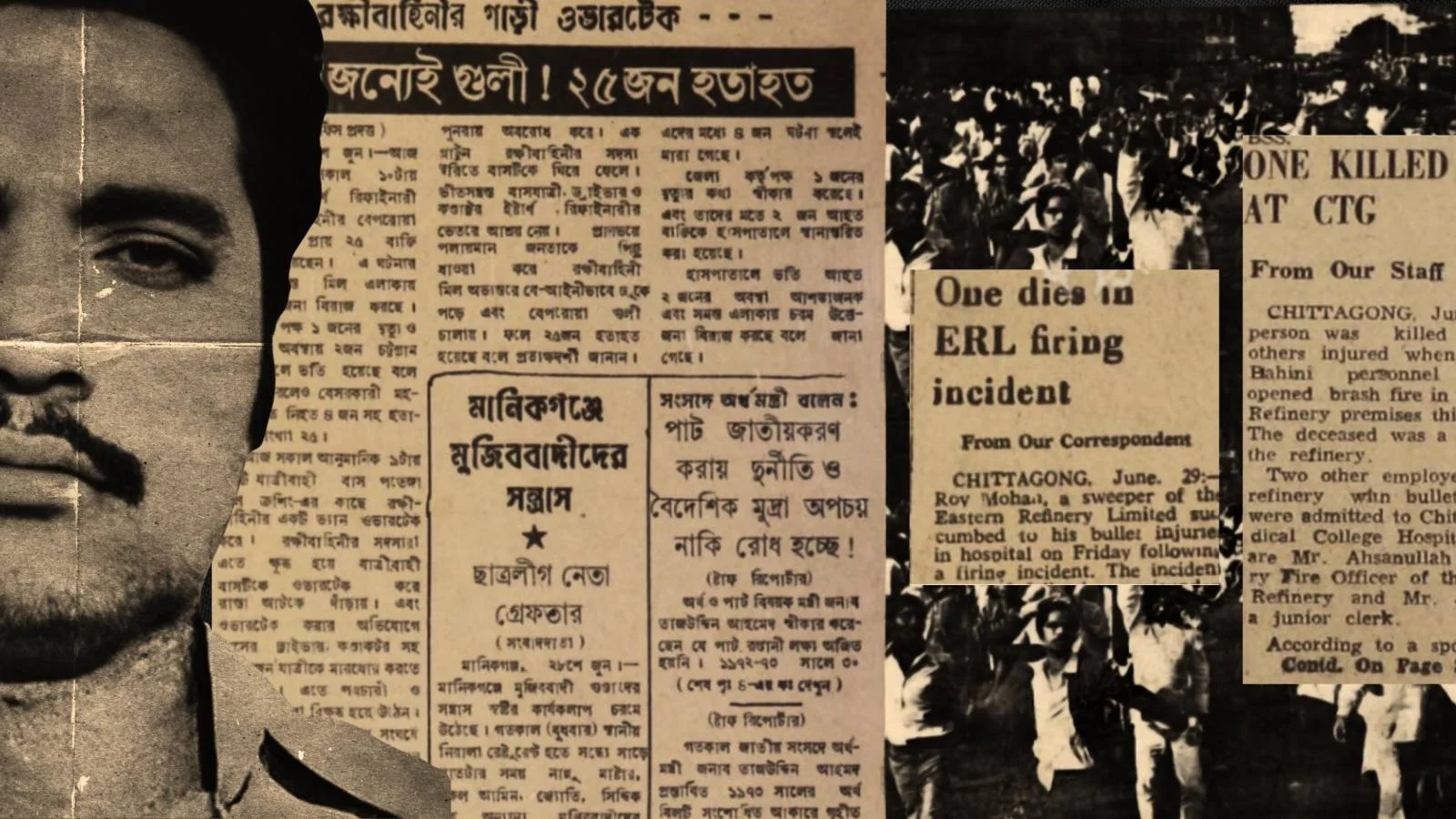
Illustration by Jamhoor, created using publicly available images
Today, discussions about historical leftist repression are often globalised: Instagram pages and social media accounts devoted to leftist history increasingly highlight massacres in South America, Southeast Asia, and Europe. Yet the systematic targeting and extrajudicial killings of leftists in Bangladesh remains largely forgotten. Bringing this history to light not only to honours the memory of those who suffered, it helps us understand how these patterns of repression shaped political activism, dissent, and student-led protests in Bangladesh, like the July Uprising, that erupted decades later.
Hope Turns into Despair
After a nine-month liberation war, Bangladesh achieved independence on December 16, 1971. The victory was accompanied by immense popular hope. Many believed that the new state would reject authoritarianism, corruption, and social inequality, and uphold democracy, human rights, and social justice. Sheikh Mujibur Rahman, affectionately known as Bangabandhu (Friend of Bengal), was widely seen as a leader capable of implementing this vision.
At the same time, socialists and communists in Bangladesh believed that a truly prosperous and egalitarian state can only be built following the ideals laid down by Karl Marx, Vladimir Lenin, and Mao Zedong.
Soon the hopes and aspirations of the people were shattered, as the newly founded Bangladesh descended into authoritarianism, corruption, food crisis, unemployment and rising crime rates between 1972-75. Armed dacoits used to plunder villages, extort from people, attack police stations, and even often kidnap women.
Investigative journalist Anthony Mascarenhas in Bangladesh: A Legacy of Blood (1986), described the atmosphere of the period as armed gangs, often wearing military caps and carrying rifles, openly plundering markets and neighbourhoods. Moudud Ahmed, a lawyer and politician, in his book, Bangladesh Sheikh Mujibur Rahman’er Shashonkaal (Bangladesh Era of Sheikh Mujibur Rahman), wrote that criminals masqueraded as freedom fighters and took control of different territories due to weapons left behind during the liberation war.
Implemented as part of Mujib’s own interpretation of socialism, the Bangladesh government nationalised 85 percent of industries and 90 percent of foreign trade. Political scientist Talukder Maniruzzaman argued that Awami League (AL) adminstrators appointed to these nationalised factories, had no knowledge about running a capitalist or socialist system. Instead, they focused on enriching themselves through smuggling machinery and raw materials to India. These administrators, comprised of AL members, became a corrupt, high-income elite class formation.
Soon after independence, on April 4, 1972, the New York Times, broke a story on corruption by the AL. Groups within the party were taking over truckloads of food aid in daylight to sell it later to the highest bidder. Others used their influence to get lucrative government contracts. Another report by New York Times, onOctober 4, 1972, documented how food relief meant for war-affected Bangladesh was being smuggled into India. These practices created a combined economic and food crisis in Bangladesh, as food prices soared.
Was Mujib Socialist or Anti-worker?
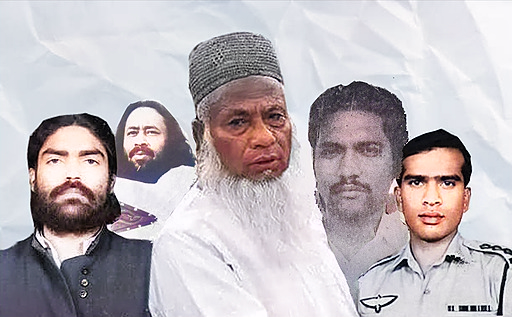
Five Leaders of the Bangladesh Left. Serajul Alam Khan (left), Major M.A Jalil (background), Maulana Abdul Hamid Khan Bhashani (center), Siraj Sikder (background), and Col. Abu Taher (right). Image: @centristbangladesh
Sheikh Mujib preached his own version of socialism—Mujibism. This characterisation of Mujib was rejected by the Bangladeshi left. Badruddin Umar, a Marxist-Leninist theorist and activist, wrote an essay in Shaptahik Shadhika on September 3, 1972, which argued that the AL’s nationalisation programme was not intended to establish socialism, but rather to prevent the working class from achieving genuine political power. The repression and chaos produced by this so-called socialism, he warned, were neither accidental nor surprising.
“The Awami League’s nationalisation programme was not intended to establish socialism, but rather to prevent the working class from achieving genuine political power.”
Leftist politician Haydar Akbar Khan alleged that Sheikh Mujib himself was an ally of American imperialism, rather than an opponent of it. Khan’s book Dui Doshoker Bam Rajniti: Shonkot o Shomossha(Two Decades of Left Politics: Crisis and Problems), criticised Mujib for handing over national oil exploration in Bay of Bengal to American corporations. He alleged that American establishment had bailed Mujib out of prison in Pakistan in exchange for his support for American policies in the region.
With corruption, lawlessness, and a looming food crisis facing newly formed Bangladesh, the Bangladeshi left rejected Mujib’s version of ‘socialism’ and began a campaign for a state based on true socialist ideals.
Forging an alliance between Maoists and Leninists, the three major leftist political parties were led by major figures in the Bangladeshi left. The National Awami Party (NAP) was led by Maulana Bhashani, Sarbohara was led by Siraj Sikder, while Jatiyo Samajtantrik Dal (JSD) was led by Major Abdul Jalil, Serajul Alam Khan, and Colonel Abu Taher. The three parties rapidly gained maximum support in the rural populace and students, who had been disillusioned by the corruption and authoritarianism of Mujib regime.
The Formation of Rakkhi Bahini
Fearing the rise of a leftist opposition, the AL regime began a campaign of state-backed terror to silence them. AL politicians began to advise Mujib to strengthen the police and Ansar forces to counter the lawlessness. Instead, Mujib decided to form an elite paramilitiary force, named Jatiya Rakkhi Bahini (JRBorNational Defense Force), officially tasked with combatting armed gangs and establish law and order.
Rakkhi Bahini, comprised mostly of Mujib Bahini members loyal to Mujib during 1971 Liberation War, was officially founded on February 1, 1972. Rakkhi Bahini members swore direct allegiance to Sheikh Mujib and worked with local AL party units. Thus, they were often synonymously called Mujibists. Provided automatic weapons, steel helmets, jeeps, and trucks, the Rakkhi Bahini managed to establish camps all over the country. The Mujib regime continued to increase budget allocations for Rakkhi Bahini, while reducing funds available for the army and police force.
“Political scientist Talukder Maniruzzaman notes that leftist parties like JSD took a strong stance against Indian and American influence on Bangladesh, seeing it as imperialism, while simultaneously opposing Mujib regime.”
The Indian government supported the creation of Rakkhi Bahini. Several key figures in Rakkhi Bahini, including Training Director, Lieutenant Anwar-ul Alam, admitted in his book Rakkhi Bahini’r Shotto Mittha (Truth & False of Rakkhi Bahini), that India was eager to assist in forming Rakkhi Bahini, and sent an Indian Army team led by Major Trivedi to Dhaka for training purposes. In another book Rakkhi Bahini’r Ojana Oddhay (The Unknown Chapter of Rakkhi Bahini), Assistant Director, Colonel Sorowar Hossain Molla, admitted that Rakkhi Bahini’s uniforms, weaponry and even boots came from India.
A Massacre of the Left

Maulana Bhashani’s weekly leftist magazine, Shaptahik Haq Katha (Weekly Absolute Truth), published an article on May 26, 1972, titled, ‘Around a million leftists are to be killed,’ on a foreign conspiracy to kill and assassinate leftists in Bangladesh. Image: Songramer Notebook
Maulana Bhashani’s weekly leftist magazine, Shaptahik Haq Katha (Weekly Absolute Truth), published an article on May 26, 1972, titled, ‘Around a million leftists are to be killed,’ on a foreign conspiracy to kill and assassinate leftists in Bangladesh. Political scientist Talukder Maniruzzaman’s book, The Bangladesh Revolution and its Aftermath, notes that leftist parties like JSD took a strong stance against Indian and American influence on Bangladesh, seeing it as imperialism, while simultaneously opposing Mujib regime.
These fears came true as Rakkhi Bahini began to target the Bangladeshi left after June 1972. The anti-India, anti-US, anti-AL position of the Bangladeshi left made them targets of the Rakkhi Bahini. This paramilitary force operating as a killing squad, similar to CIA-funded NATO stay-behind army squads who targeted the left in Western Europe, Greece, and Turkey. Rakkhi Bahini had a similar modus operandi as Gladio—enforced disappearances, illegal detentions, tortures, assassinations, and even massacres. Even some of their tactical playbook, such as Cordon-and-Search operations, was similar.
“Maulana Bhashani’s weekly leftist magazine, Shaptahik Haq Katha (Weekly Absolute Truth), published an article on May 26, 1972, titled, ‘Around a million leftists are to be killed,’ on a foreign conspiracy to kill and assassinate leftists in Bangladesh.”
Indian Major General Sujan Singh Uban, who helped build Rakkhi Bahini, had commanded a special squad of CIA-trained Tibetan fighters against China in the 1960s. Whether Sujan Singh learnt and taught the Gladio blueprint from CIA to the Rakkhi Bahini remains a subject of debate. But, in practice, Rakkhi Bahini implemented a Gladio-like scorched-earth strategy against the left and other political opponents of Mujib regime.
Investigative journalist Ahmed Musa’s book Itihasher Katghoray Awami League (Awami League In The Witness Box of History) notes that Rakkhi Bahini’s extrajudicial killings and enforced disappearances on left activists were so intense, that sometimes the Bangladesh Army and police would arrest leftists and imprison them to save their lives.
One of the first major anti-left extermination campaigns started in Kishoreganj, in the sub-district Bajitpur, where 126 people were killed by Rakkhi Bahini for allegedly supporting left politics. This was part of a brutal camapign. A farmer from Kishoreganj, Abdul Ali, was forced to behead his own son, Rashed’s dead body after the Rakkhi Bahini shot him dead. In Pirojpur, Barishal, Amina, suspected of sheltering leftists, was doused with kerosene, leaving severe burns.
As Bangladesh’s rural population became more sympathetic to the leftist cause, Rakkhi Bahini raids became the norm. In Kishoreganj’s Sararchar area, Rakkhi Bahini set up an illegal detention facility called ‘Tiger Hole’ in their camp, where they used to detain and torture people suspected of being sympathetic to leftist politics. Detention facilities and torture cells like Tiger Hole were established in Rakkhi Bahini camps all over the country. Women and teenagers were not spared from the paramilitary’s brutality. The Rakkhi Bahini also targetted non-leftist opponents of the Mujib’s government.
Looting and Communalism
Rakkhi Bahini and local AL cadres got together to loot and rob people, as well as occupied land, especially when it was owned by Hindus. In an interview, Saiful Islam, a leftist activist from Kishoreganj, noted, “The Mujibists do the looting themselves, and then blame it on leftists.” Aruna Sen, wife of leftist leader Shanti Sen, noted that Rakkhi Bahini cadres in rural areas also spread anti-Hindu sentiments and called them ‘Malauns’ (a derogatory slur against Hindus).
In 1973, a road-rage incident linked to Rakkhi Bahini created national outrage. When, on June 29, 1973, a passenger bus overtook a Rakkhi Bahini truck, the Rakkhi Bahini followed the bus and opened fire at the Chittagong Eastern Refinery refinery. Four people died and several were injured. Similar incidents of Rakkhi Bahini raiding factories to assault workers were reported.
“The Rakkhi Bahini’s role in the Chittagong Hill Tracts continues to shape the conflict that Bangladesh still grapples with today.”
Ethno-nationalist and Bengali-chauvinist, the Rakkhi Bahini’s reign of terror spread to indigenous tribes and ethnic minorities living in the Chittagong Hill Tracts. In 1972, after Mujib denied constitutional recognition to ethnic minorities, Rakkhi Bahini raided in tribal villages under the pretext of rooting out ‘Pakistani Army collaborators of 1971.’ The raids in the Hill Tracts followed a similar pattern: illegal detentions, torture, massacres, and rapes. Indigenous-owned land was also taken over and handed over to Bengalis. The Rakkhi Bahini’s violence and land occupations created fissures between Bengalis and indigenous Paharis which continue to shape the ongoing conflict.
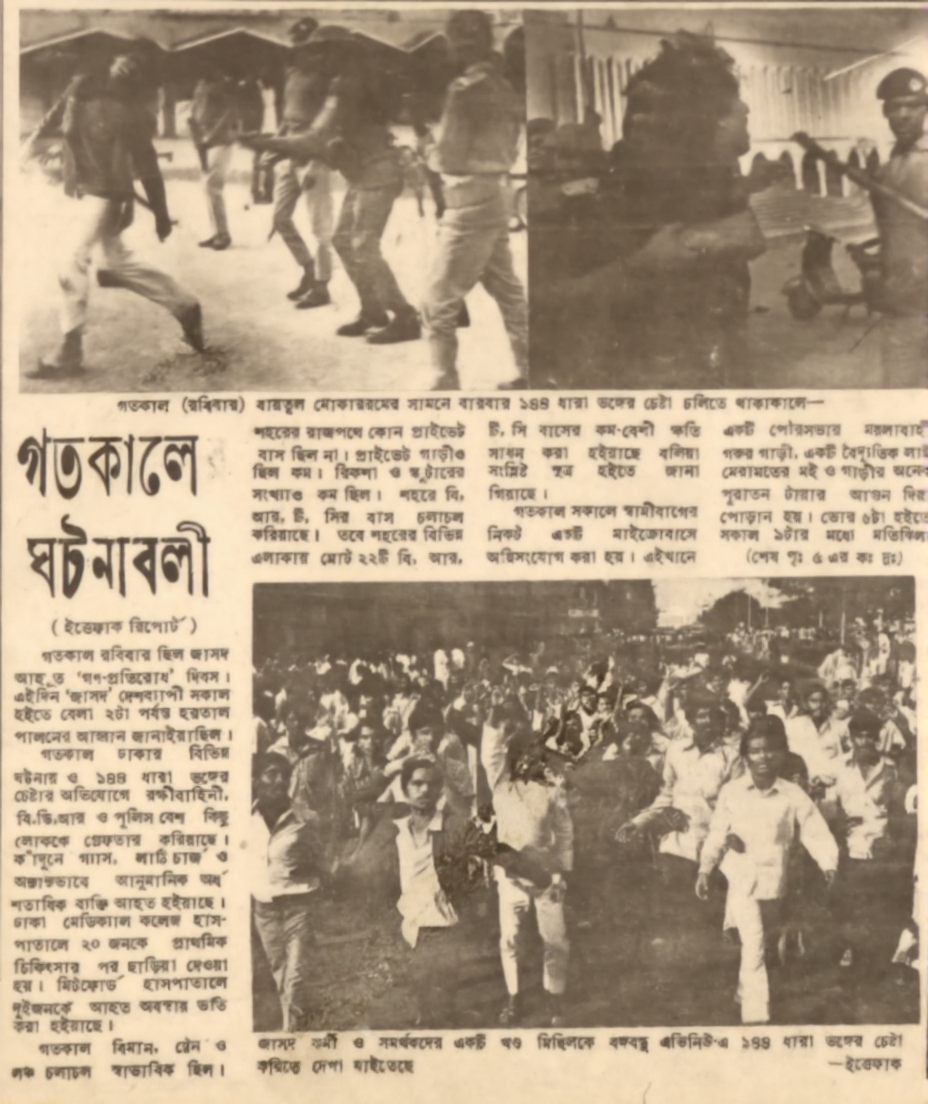
Newspaper report about Rakkhi Bahini’s attack on January 20’s JSD Protest. Image: Daily Ittefaq/Songramer Notebook
The Rakkhi Bahini’s action were protected by Mujib and the AL. The Rakkhi Bahini Amendment Act of 1974 stripped courts of the power to hold the force accountable. Moudud Ahmed, lawyer and politician, writes that when 18 year-old Shahjahan disappeared after being detained for allegedly being a JSD activist, the Rakkhi Bahini kept no records of the detention. The absence of systematic record-keeping of its searches, seizures, arrests, or other operations was a pattern which has prevented meaningful judicial investigation into the Rakkhi Bahini’s activities at the time.
Mass Killings
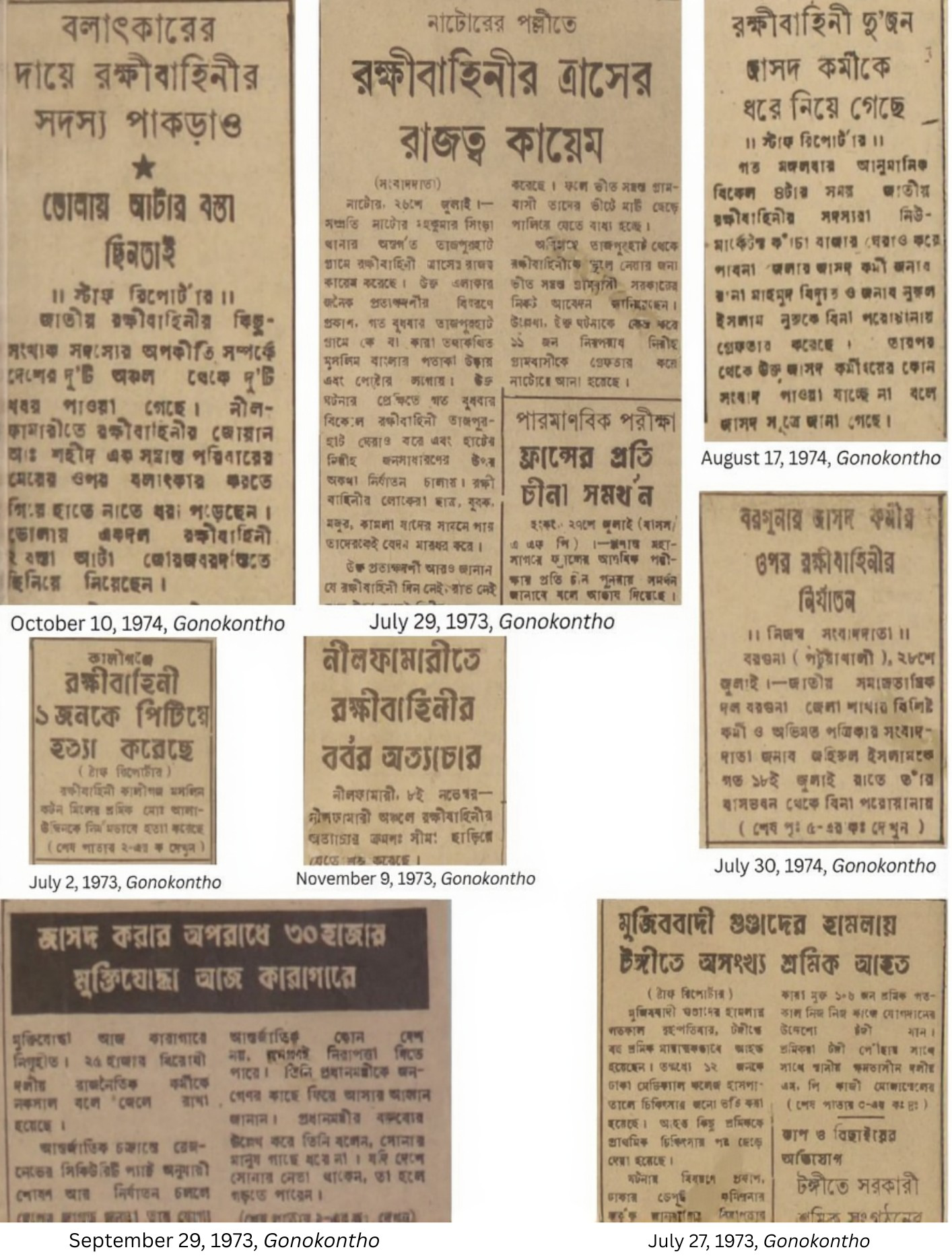
Reports catalogue Rakkhi Bahini’s criminal activities, including rape, enforced disappearances, and terrorising areas. On September 29, 1973, Gonokontho reported that around 30,000 freedom fighters were languishing in jails for being JSD activists. Image: Songramer Notebook
On January 20, 1974, JSD activists broke curfew to hold a protest in Dhaka against the Rakkhi Bahini’s terror, the AL’s corruption, and economic mismanagement of the country. The Rakkhi Bahini brutally broke the protest by beating protestors, including those who took shelter in the Baitul Mukarram Mosque. Political historian Mohiuddin Ahmed, in Jashoder Utthan Poton: Osthir Shomoyer Rajniti (The Rise and Fall of JSD: Politics of The Chaotic Era) writes that at another JSD protest on March 17, in Ramna, Dhaka, Rakkhi Bahini shot dead around 50 people.
Rakkhi Bahini was reported to have opened fire at the public with semi-automatic rifles and machine guns in several parts of the country. In a story published on June 23, 1975, Chicago Daily News reported around 1,500 teenagers were killed by Rakkhi Bahini in Mymensingh district alone in January 1974. Most victims were thought to be part of the Sarbohara party. The publication of the story led to a ban on foreign journalists entering the country, and increased restrictions on local newspapers.
Rakkhi Bahini was also accused of using brutal methods in torture, including boiling water. Investigative journalist Ahmed Musa, wrote, “Some of their medieval-styled brutality even surpassed that of the Pakistan Army.” In his book Dui Doshoker Bam Rajniti: Shonkot o Shomossha (Two Decades of Left Politics: Crisis and Problems, Haydar Akbar Khan’s writes that after a Rakkhi Bahini camp in Kaliganj, Jessore, was dismantled a mass grave was discovered with at least 60 bodies. Estimates of the total number of people massacred by the Rakkhi Bahini between 1972–75 vary: investigative journalists like Masudul Haque and Ahmed Musa suggest roughly 10,000–30,000 were killed, while JSD claims the killings were as high as 60,000.
Siraj Sikder’s Last Stand and Mujib’s Assassination
Besieged by the Rakkhi Bahini’s reign of terror and severe economic mismanagement, Sarbohara leader Siraj Sikder decided to take up arms to overthrow the Mujib’s regime. AL narratives paint Sikder as ‘lal-shontrasi’ (red-terrorist). But no one asks: what made him chose guerilla warfare?
“Besieged by the Rakkhi Bahini reign of terror, Sarbohara leader Siraj Sikder decided to take up arms to overthrow the Mujib’s regime. AL narratives paint Sikder as ‘lal-shontrasi’ (red-terrorist). But no one asks: what made him chose guerilla warfare?”
Sikder chose the path of Che Guevera after the 1974 famine caused by corruption and economic mismanagement and the Rakkhi Bahini’s state-backed reign of terror. However, Sikder could not complete his revolution, as he was killed by Rakkhi Bahini in a staged-encounter on January 2, 1975.
The notority of the Rakkhi Bahni amongst the Bangladesh army officers and cadre and the impunity with which Sikder was killed was reported to have inspired ideologically centrists in the Bangladesh army, including Sayed Faruq, Bazlul Huda, Abdur Rashid, and Shariful Haque Dalim to stage a coup against Mujib. The reign of terror of the Rakkhi Bahini ended on August 15, 1975, when the 2nd Field Regiment staged a coup, and dismantled the Rakkhi Bahini camps after assassinating Mujib.
Many in Bangladesh celebrated the fall of unpopular Mujib’s regime, and the Rakkhi Bahini’s reign of terror came to an end. However, Bangladesh’s political leadership learnt little from how the creation of Rakkhi Bahini sealed the fate of Mujib, and revived the practice of using paramilitary forces, namely the Rapid Action Battalion in 2004, which remains accused of extrajudicial killings of over 1,000 members of the political opposition. The dark chapter of Bangladesh’s history in which there was a state-backed massacre of leftists must be remembered, not just to honor the memories of Bangladesh’s fallen revolutionaries in the global left, but to stop the mistakes of the past from being repeated in the present and future of the country.
Ifaz Ali Khan is a writer, independent researcher, and human rights’ activist, currently pursuing a bachelors degree in Computer Science & Engineering at East Delta University. He also writes for International Policy Digest.