
Dreams of a Better World
Tariq Mehmood’s latest novel follows the radicalization of a Pakistani man after his emigration to Britain.
“When this Saleem returns to Pakistan, he realizes that he has become a chimera of nationalities, despised for being Pakistani in Britain, estranged as a Valaiti (foreigner) in Pakistan.”
Sing to the Western Wind is not the first novel Tariq Mehmood has written about a man named Saleem moving between Pakistan and Bradford, England. That would be 2003’s While There Is Light, in which the protagonist’s mother sends him in his youth to stay with relatives in Bradford. Growing up in Rivers of Blood-era England, he helps form a group of Asian British activists and is later arrested on speculative terrorist charges (a fictionalized rendering of the 1981 arrests of United Black Youth League members, which included Mehmood, that led to the Bradford 12 trial). When this Saleem returns to Pakistan, he realizes that he has become a chimera of nationalities, despised for being Pakistani in Britain, estranged as a Valaiti (foreigner) in Pakistan.
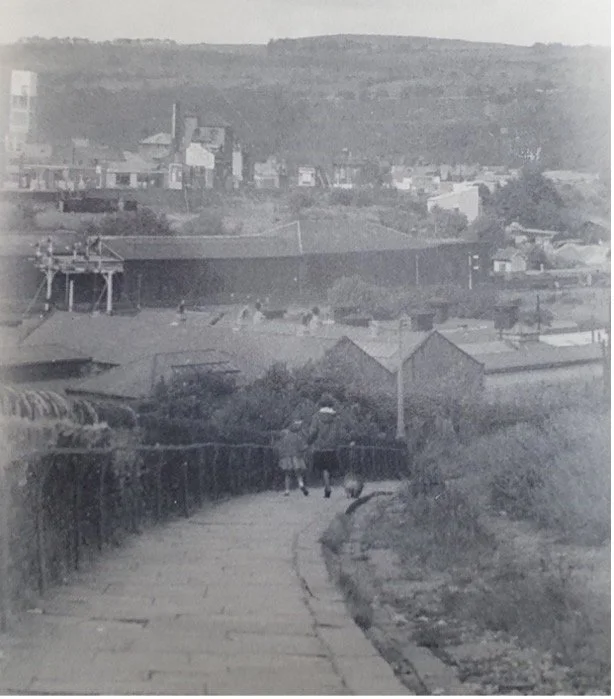
Bradford, England. Photo by Akbal Singh Kang. Image: National Science and Media Museum.
Published by Daraja Press in 2016 and re-issued by Verso this June, Sing to the Western Wind centers on a Saleem who takes a more itinerant route to disaffection and political action. He replants himself in Bradford in 1965, uprooting himself from his life as a teacher in a village near Rawalpindi, as well as from his mother and his lover Yasmin, who is of lower caste than him. Fresh off the plane, he and other Pakistani emigrants follow an agent to a house of others like them, where they enter into grim contracts: “You village donkeys; don’t forget that you can’t even pray before you pay,” the agent, also their landlord, instructs them. In addition to receiving twenty pence per week from a communal fund, “everyone in the house was also signed up to the death committee and should anyone die, the cost of taking their body plus one person home was paid for.”
“Saleem initially operates in a state of political inertia in Bradford, feeding lines of cotton into spindles, but those around him push him into motion.”
Saleem’s spoken English soon helps him land a job on the all-Asian night shift at a nearby textile mill, and his ability to read and write letters for his fellow migrants is a further boon, granting him a better room at the house and the title of Masterji at the mill. Saleem initially operates in a state of political inertia in Bradford, feeding lines of cotton into spindles, but those around him push him into motion—beginning with a formal letter to mill management requesting cleaner latrines, which other workers convince him to write. Then, a chance run-in with a friend—Mangal Singh, whose Sikh family was expelled from Saleem’s village following the creation of Pakistan, and who is also on the night shift—pulls him into the orbit of organized action. Guided by the values of his comradely father, Mangal convinces the night shift labourers to join the mill’s union and make elemental demands: bridging the wage gap between Asian and white workers and keeping the canteen open at night. Saleem and Mangal begin to attend union meetings and pub discussions that erode Saleem’s sense of embarrassment at being a mill worker and instill in him socialist visions for the world.
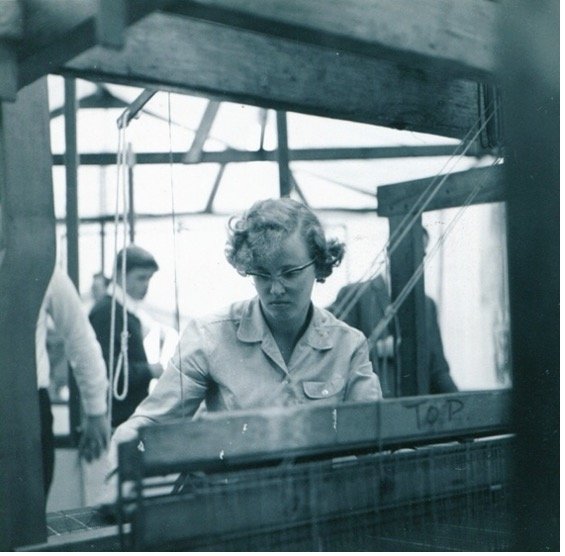
An English mill. Photo by Akbal Singh Kang. Source: National Science and Media Museum.
“Saleem’s dynamic with Carol and Yasmin comes to represent the age-old fork in the diasporic road.”
That utopian glimmer lasts six years. As fractures form among the mill workers over Bangladesh’s liberation war back in South Asia, Saleem receives the news that his mother has passed away. When he returns from a truncated period of mourning, the mill’s closure plunges him into precarious employment. He drifts to East London, takes up work as the driver for a bakery, and starts seeing a new lover, Carol, the rebellious daughter of his boss at the mill. Saleem’s dynamic with Carol and Yasmin comes to represent the age-old fork in the diasporic road: while he all but forgets Yasmin, who accused him of being a white man during his recent sojourn in Pakistan, the typical frictions of miscegenation wear on him and Carol. Though Carol’s father and brother attempt to menace Saleem away, Carol herself presses for a more committed relationship, at which Saleem balks. “So you think your white bit doesn’t understand [that] you lot only do girlfriends, eh?” she asks, frustrated that their relationship has stalled in Britain. “Just fuck us and marry your village virgins. Isn’t that it?”
Eventually, Saleem capitulates and returns with Carol to his village. Living now in a luxurious toilet-laden house built from his British wages, Saleem has become “a saab, a babu, a sir, with a big Pukka house and servants.” One of those servants is Yasmin, the only person Saleem’s cousin Habib can find to cook at the house on short notice. Saleem feigns to not know her, but even Carol wonders, “Why is there so much pain in Yasmin’s face?” Uncomfortable with this new Saleem, one who discourages her from giving money to the beggars frequenting the house, Carol decides to go back to Britain. Saleem remains to help Habib with his business, the Kamal Goods Forwarding Agency.
Here the novel veers into territory beyond the slow-burning identity crisis of the previous one hundred pages. Yasmin comes to Saleem for help locating her uncle, Kala, a truck driver who does business with Habib—though she does not pass up the opportunity, first, to chastise Saleem for his silently traitorous loftiness: “Then who am I? Who is this small dark massalan [low-caste], who is no better than a donkey. Ride her if you will sir.” The search for Kala sends Saleem and Habib to Charsadda, then across the border into the battlegrounds of Afghanistan during the Soviet-Afghan War. The intricate sketches in this portion of the novel bring together a cigar-puffing pir of ambiguous nationality, mujahideen fighters, captured Afghan women, and unaccounted Stingers with devastating consequences, drawing from Mehmood’s time as a journalist at the Frontier Post. Saleem’s life, in the aftermath, becomes vague and unsure of itself:
And somewhere in the world, I married Yasmin. And sometime after that, when I was sitting in the hollow of the banyan tree, chain-smoking dope-filled cigarettes and listening to a nightingale that had kept me company for I don’t know how long, the postman came and gave me a postcard from Carol.
And some decades after that, he is back in Britain, widowed after Yasmin’s death, estranged in an on-and-off way from their daughter Aisha, and hallucinating the past in between inhales of the Blairite era—and yet he is the most resolute he has ever been. He plans a suicide bombing in Manchester. On his final walk, reminders of his motivations flutter past: neighbours who shunned him after September 11, a veteran who lost both hands in Iraq, a newspaper asking readers to turn in terrorists as defined by a bullet-point list.“Handling chemicals is dangerous. Maybe you’ve seen goggles or masks dumped somewhere?” one of the criteria innocently demands. (If Saleem were making his walk in the 2020s, the newspaper would ask whether its readers know anyone who is part of or sympathetic to Palestine Action.)
A poster depicting the acquittal of the Bradford 12, as featured in the Above the Noise exhibit in Bradford’s National Science and Media Museum. Source: National Science and Media Museum.
Mehmood is not one to settle for bare-minimum solutions. When Bradford’s National Science and Media Museum sought to host an exhibition of the local history in 2019, a semantic skirmish between former members of the Asian Youth Movement and the United Black Youth League (both of which Mehmood helped found) caused him to reflect, four years later: “The youth movements of the past were no more. The dreams of a better world had got lost in the nightmares of the present.” Sing to the Western Wind is a novel about, by, and for those attuned to this bleakness, and attempting to make do with hopelessness.
Aditya G. is a writer based in New York City.