A Generational Change in Nepali Politics
On the long road that turned a rapper into Nepal's prime minister.
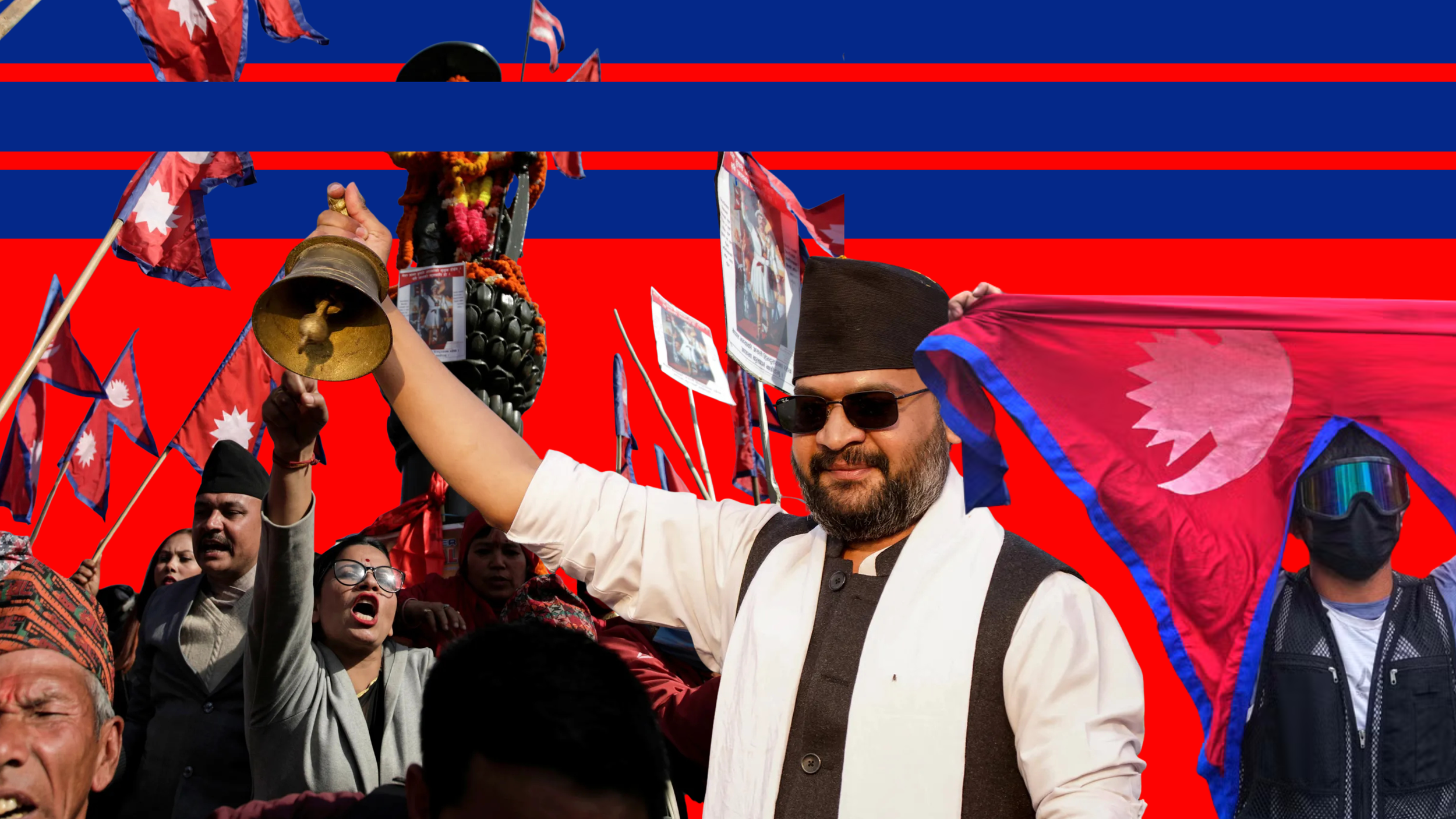
On March 27, Balendra “Balen” Shah, a 35-year-old rapper, structural engineer, and former mayor of the city of Kathmandu, was formally sworn in as the prime minister of Nepal. Shah’s inauguration was replete with symbolism. Shah, the son of an Ayurvedic doctor, was administered the oath of office and secrecy by President Ram Chandra Poudel at exactly 12.34pm, a time chosen according to Vedic numerology. A 108 Hindu priests and 17 Buddhist monks chanted auspicious hymns while blowing conch shells as if announcing the arrival of a wartime general. A day earlier, on March 26, Shah had released a new rap song, Jay Mahakali, harkening to the battle cry of the Gurkha soldiers—Jay Mahakali, Ayo Gorkhali (Hail the Goddess Mahakali, the Gorkhas are here).
The very next day, in the early hours of the morning, the Balen Shah government took former Prime Minister KP Sharma Oli and former Home Minister Ramesh Lekhak into custody. Oli, who leads the Communist Party of Nepal (Unified Marxist-Leninist), and Lekhak, who is from the Nepali Congress political party, had both resigned in ignominy after the mass death and destruction of what has been labelled “the Gen Z protests” of September 2025.
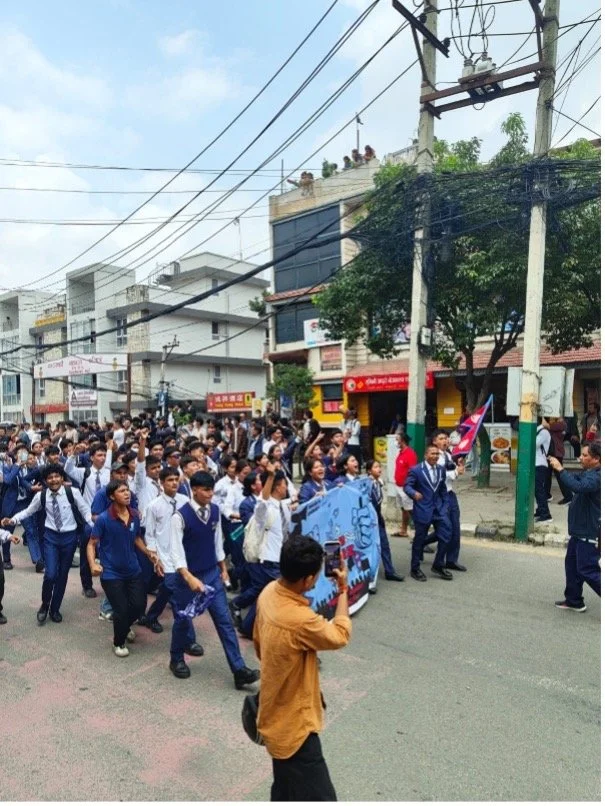
Students participate in an anti-corruption protest in Kathmandu, sparked by the banning of social media by the government of KP Sharma Oli on September 8, 2025. Photo: Pranaya Rana.
On September 8, a protest movement against corruption, impunity, and a social media ban led primarily by young Nepalis ended in bloodshed after security forces fired upon unarmed protesters, killing 19. Lekhak, the home minister, resigned the same day, but Oli, the prime minister, refused, claiming no responsibility for the deaths the security forces had wrought.
Nepal exploded in anger the next day, burning down state institutions, political party offices, and attacking politicians. Sher Bahadur Deuba, the chief of the Nepali Congress, and his wife, Arzu Rana Deuba, were brutally assaulted by protesters in their homes before being rescued by the Nepal Army. Oli finally resigned and was airlifted to the security of Army barracks, where he spent the next week in hiding. A new interim government led by former Chief Justice Sushila Karki, chosen by Gen Z leaders and endorsed by thousands in an informal Discord poll, was put in place with the mandate to hold elections in six months. The Kakri government, as demanded by Gen Z, formed a commission to investigate the death and destruction of those two days in September when a total of 76 Nepalis died.
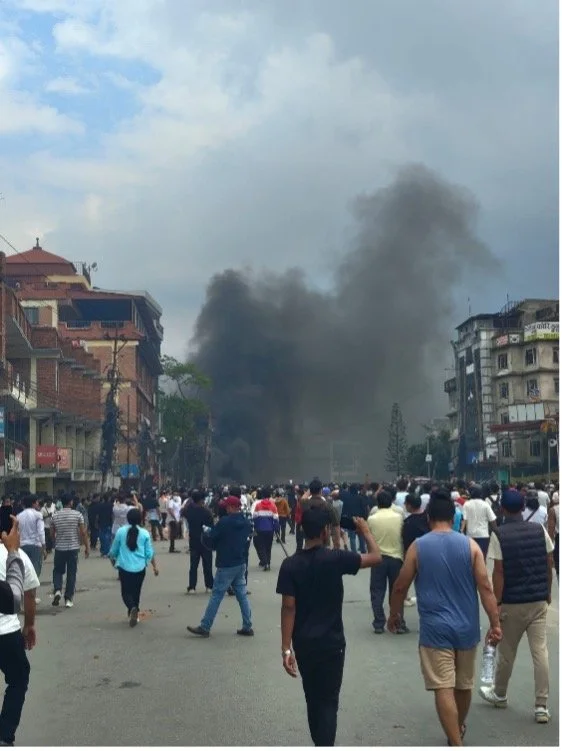
Protesters set fire to a police station in Maharajgunj, Kathmandu, on September 9, 2025. Two police officers would be lynched by rampaging mobs. Photo: Pranaya Rana.
“Shah was seen as an avatar of a new way of doing politics in Nepal–brash, decisive, and not afraid to challenge entrenched political interests.”
The Karki government completed its mandate, successfully holding an election for a new House of Representatives on March 5. The Rastriya Swatantra Party (RSP), a party formed just over three years earlier in 2022, dominated the election, winning 182 out of 275 seats, just two seats short of a two-thirds majority. Central to the RSP’s sweeping victory was Balen Shah, the Kathmandu mayor who had emerged as a central figure during the Gen Z movement. Shah was seen as an avatar of a new way of doing politics in Nepal–brash, decisive, and not afraid to challenge entrenched political interests. Tellingly, Shah mounted a direct challenge to Oli in the election, contesting the Jhapa-5 constituency, long considered Oli’s stronghold. Shah defeated Oli with over 70,000 votes, the most any candidate has received in an election.
Shah had long held Oli directly responsible for the carnage of September 8. He believed that Oli, as prime minister, held ultimate moral responsibility for the killings and, by refusing to step down, had directly contributed to the violence and destruction of September 9. During the hustings, Oli offered to debate Shah publicly. The latter refused, saying he would not share the same stage as a “terrorist.” Days after the March 5 election, the investigative commission formally submitted its report to the interim government. Despite widespread calls from Gen Z activists, the Karki government refused to publicly release the report. However, the report was leaked to the press in full, confirming Shah’s conviction. The report recommended that Oli and Lekhak, among others, be investigated and prosecuted for reckless killing and investigation and prosecution for reckless and negligent killing under the Nepali Penal Code. That Shah would hold Oli accountable was thus foregone.
Since Oli and Lekhak’s arrest, the Shah government has moved swiftly. The very next day, another former minister was arrested on corruption charges and asset investigations have been opened against three former prime ministers, including Oli. A prominent businessman, long believed to be a primary link between politicians and corrupt business interests, has been prohibited from leaving the country. Nepal, long mired in corruption and impunity, has never had a reckoning of this scale. Although there are concerns about executive overreach and a lack of due process—Oli and Lekhak were taken into custody without a formal arrest warrant signed by a judge—Nepalis by and large are firmly in Shah’s corner, celebrating what they see as long overdue.
A History of Revolution
The RSP’s thumping electoral victory and Shah’s elevation to prime minister are no doubt pivotal moments, but modern Nepali history is replete with such moments of sweeping political change. Every few decades, Nepal witnesses a popular revolt that reshapes the country.
In 1990, thousands of Nepalis took to the streets across the country, demanding an end to Panchayat, the direct rule of the monarchy, which had been in place since the early 60s. This movement, the first People’s Revolution, stripped the monarchy of absolute power, relegating it to a ceremonial role, and vested authority in the people, as represented by the political parties. A new constitution was written, and Nepalis celebrated the reestablishment of democracy after decades of rule by a dictatorial monarch.
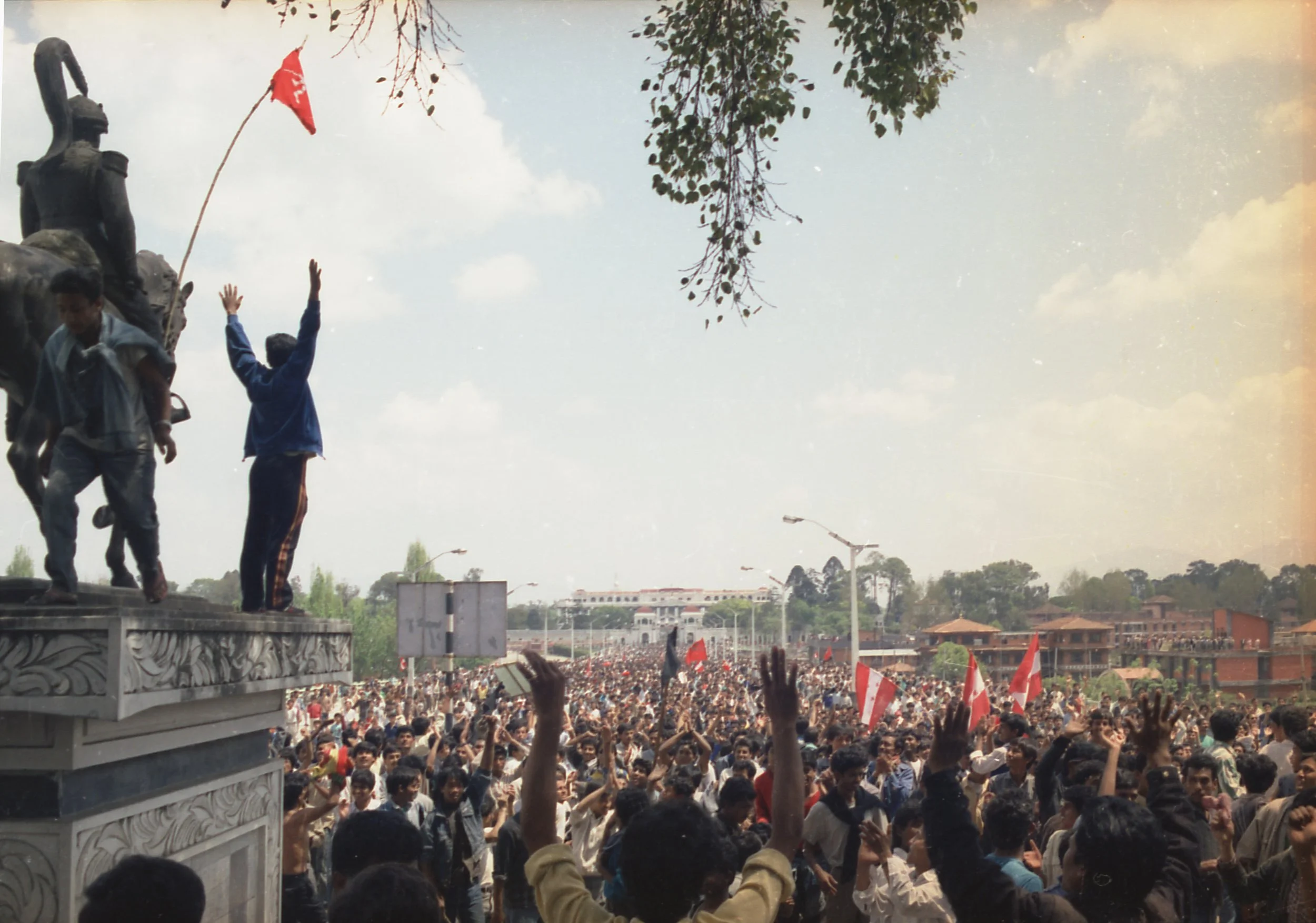
Assembly in Kathmandu during the 1990 People’s Revolution. Image: Min Ratna Bajracharya.
Barely six years had passed when a new revolution emerged, this time in the country’s rural mid-west. The Communist Party of Nepal (Maoist) launched a “People’s War” in February 1996, demanding an end to feudalism, as represented by the monarchy, and the establishment of a secular “people’s republic” that would ensure the rights of the poor and marginalized. Initially dismissed by the state as a minor security issue, the insurgency found broad purchase among Nepal’s rural poor and historically marginalized groups. The Maoist guerrillas would fight the Nepal Police, the newly created paramilitary Armed Police Force, and the professionally trained Nepal Army to a near-standstill over the next 10 years, when over 16,000 Nepalis would die.
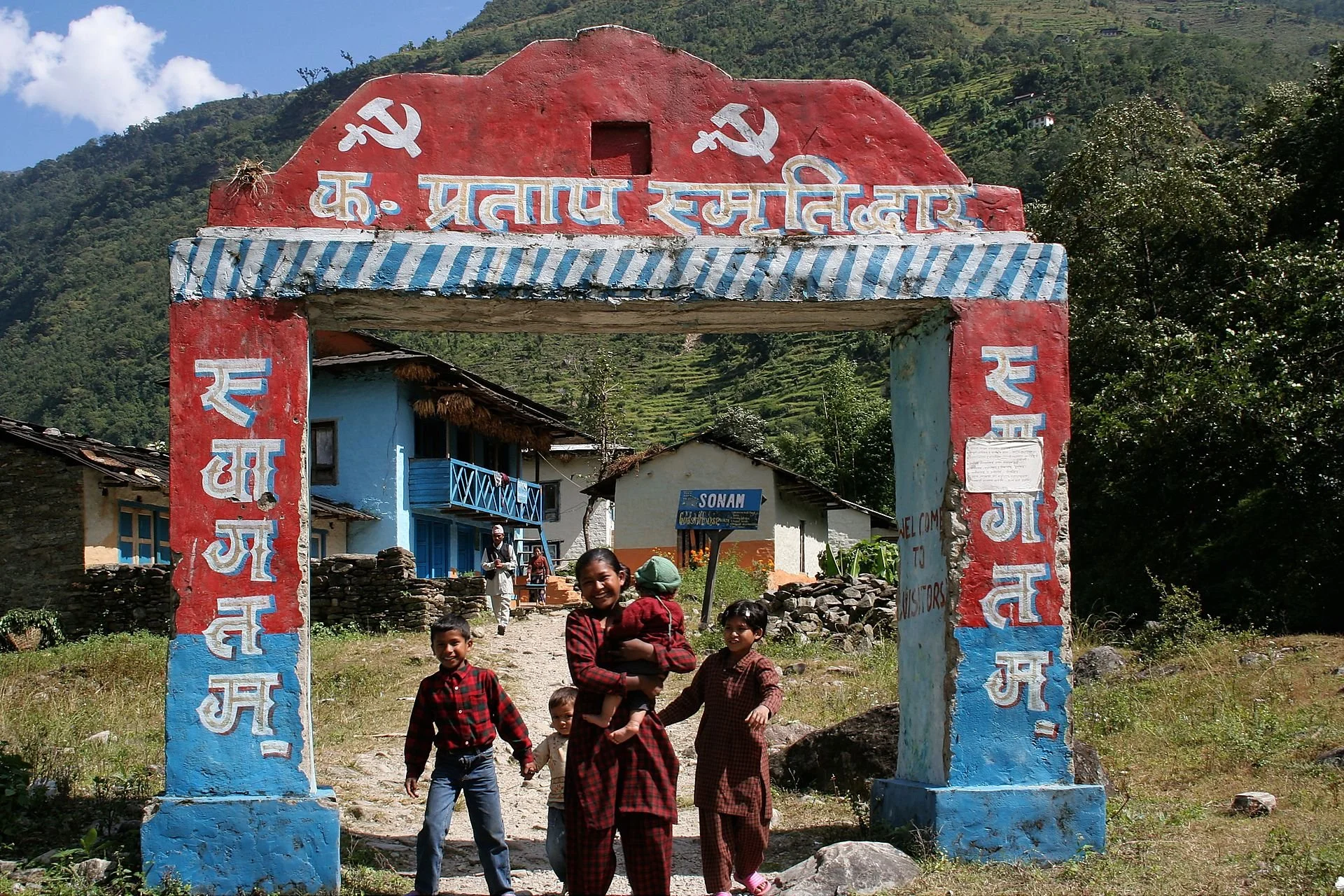
A family in a Maoist administered valley in Nepal. Photo: Pavel Novak.
In 2005, as the Maoist conflict showed no signs of abating, the ceremonial king once again seized power in a coup. Dismissing the political parties and jailing politicians, the king centralized all authority. A year later, Nepalis once again took to the streets. Nepal’s political parties banded together with the rebel Maoists to broker a peace agreement and unseat the king. The second People’s Movement ended with an election for a Constituent Assembly tasked with drafting a new constitution.
Barely a year had passed since the peace deal that ended the civil conflict when protests erupted again in the Terai plains to the south of the country. The ethnic Madhesi population, long discriminated against and socio-politically excluded from power, demanded a semblance of autonomy to throw off Kathmandu’s yoke. A new aspiration was thus added to the Constituent Assembly’s duty roster. The new constitution would now establish Nepal as a federal, secular republic, a new country shorn of its Hindu identity, its monarchy, and its unitary governance structure.
The Unfulfilled Promise of “New Nepal”
When the civil war formally ended in 2006 with the signing of the Comprehensive Peace Agreement, Nepalis were promised a “new Nepal”—a Nepal born anew from the ashes of civil conflict, enlightened and rejuvenated by revolutionary promise. Indeed, the 10-year Maoist conflict led to a broad-based reckoning with the state as it stood. The war unleashed a new wave of identity politics where historically marginalized groups like women, the Madhesis, and Indigenous Janajatis demanded a fair share of the state that claimed to represent them. Inclusion and proportional representation became key pillars of state and government composition, with quotas assigned to historically marginalized groups—women, Dalits, Madhesis, Tharus, and Muslims—based on their share of the population. The 240-year-old monarchy, a symbol of the dominance of one particular ethnic group over a country as diverse as Nepal, was abolished and Nepal declared a secular republic.
Yet, despite all their revolutionary zeal, it did not take long for the Maoists to be coopted by the very system they had once denounced as bourgeois and feudal. When the Maoists entered parliamentary politics as a political party, they were caught between a rock and a hard place. Political conditions necessitated entry into mainstream politics, which eventually brought forth the contradictions within the communist party's structure, which was largely beholden to the chairman—Pushpa Kamal Dahal “Prachanda.” Dahal quickly discovered that mainstream politics is a different beast compared to a guerrilla insurgency. The Maoists won the first election held after the signing of the peace agreement in a landslide, and Dahal ascended as prime minister. But less than a year into his tenure, Dahal resigned in ignominy. His attempt to establish civilian supremacy over the Nepal Army was protested by other parties and ultimately thwarted by the president.
Corruption allegations emerged against Dahal and the senior Maoist leadership. Hardline Maoists who had never believed in the mainstream democratic process broke away to form smaller parties. Even Dahal’s second-in-command, Baburam Bhattarai, parted ways with his chairman to form a new party with a more socialist ideology. The first Constituent Assembly, tasked with drafting a new constitution after the end of the war, failed in its mandate. The traditional parties, particularly the Nepali Congress and the CPN-UML, quickly reasserted themselves. In the second Constituent Assembly, formed in 2013, the Maoists were relegated to a distant third with the Congress and UML emerging as the top two parties, respectively.
The second Constituent Assembly also struggled, but ultimately produced a statute amidst the destruction wrought by the 2015 earthquakes that killed over 8,000 Nepalis. The new constitution was flawed and thus protested by many communities, including the Madhesis and the indigenous peoples, but it was promulgated and became the new law of the land.
The 2015 constitution promised deep structural changes to the manner in which Nepalis would now be governed. Nepalis were no longer subjects of a king but sovereign citizens with the power of the vote. Federalism would devolve power away from centralized Kathmandu to the seven provinces, each with its own Provincial Assembly to draft laws. Secularism meant that Nepal no longer had a state religion and would thus accord equal status to all faiths within the country.
Ultimately, none of these changes materialized as envisioned. Federalism was stymied by the reluctance of the federal government in Kathmandu to cede power to the provinces. Laws intended to allow the provinces to govern themselves better, remained locked in the federal Parliament for over a decade. At the federal level, the top leadership of the three largest political parties—the Nepali Congress, the UML, and the Maoists—took turns as chief executive, as if in a game of musical chairs. The Maoists had now become willing participants in coalition politics, allying in turn with the UML and the Congress as it suited them. In 2018, the UML and Maoists merged to form the Nepal Communist Party, the largest communist bloc in Nepal’s history, with a near two-thirds majority in Parliament. Yet, even this gargantuan force collapsed when the political ambitions of the two top leaders—Dahal and KP Sharma Oli—clashed.
Since the formal end of the civil war in 2006, Nepal has had 14 prime ministers, none of whom completed their five-year terms. Among these, Oli emerged as the defining figure of this era of dysfunction. Oli, formerly a second-rung leader in the UML, quickly rose to the top of the UML hierarchy on a nationalist plank in the wake of the unofficial Indian blockade in 2015. He took on a decidedly anti-Indian posture, often openly antagonizing the Indian establishment with controversial statements, and pursued closer ties to China. Both his provocations, including issuing a new political map of Nepal in 2020 that included territory claimed by India, and his courtship of Beijing, yielded nothing tangible, only serving to distract from domestic political crises and a languid economy. Oli also grew increasingly authoritarian, twice attempting to dissolve the House of Representatives—in December 2020 and again in May 2021. Each effort was deemed unconstitutional by the Supreme Court.
Yet Oli managed to return to the prime minister’s chair each time, supported by a coalition with either the Congress or the Maoists. Nepalis saw coalition politics for what it was—naked attempts to hold on to power even at the cost of allying with ideological rivals. Sher Bahadur Deuba, the president of the Nepali Congress, had been prime minister five times throughout his political career; Oli four times, and Dahal three times. None of them had much to show for it, except a creeping sense among the populace that these political actors and their cronies were benefiting materially and politically at the cost of the rest of the country.
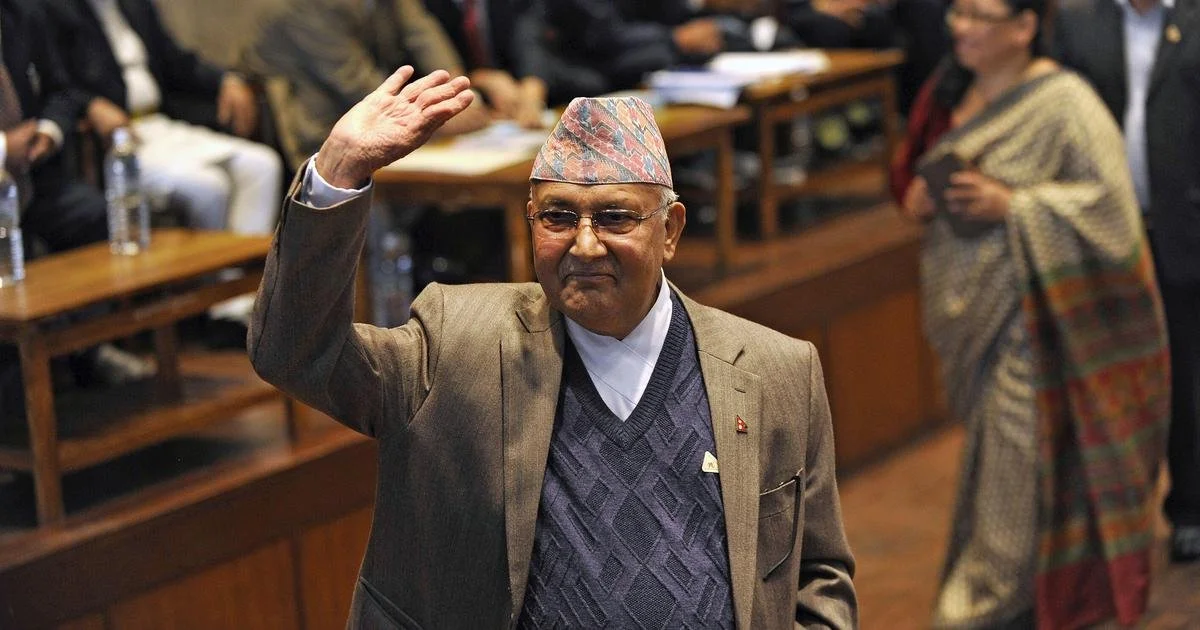
K.P. Sharma Oli has served three terms as the prime minister of Nepal, from 2015 to 2016, 2018 to 2021, and 2024 to 2025. He has been the chairman of the Communist Party of Nepal (Unified Marxist-Leninist) since 2014. Image: AFP.
Jobs were scarce and pay remained low. Nepalis were deserting the country in droves, seeking little hope of a secure future within the country. Nepali migrants ended up in war zones, even joining the Russian Army in its war of aggression against Ukraine, where dozens would die. Ten Nepali students on a “learn and earn” program in Israel were killed when Hamas launched its October 7 attacks. Thousands of otherwise healthy Nepali workers died from unexplained “heart attacks” while working in West Asian countries like Qatar and Saudi Arabia.
At home, corruption and impunity were rampant. Politicians caught on tape demanding bribes and business elites implicated in money laundering in the NepaLeaks and Pandora Papers leaks were rarely investigated, let alone prosecuted. The prevailing sentiment was that nothing could get done unless you were part of a vast patronage network linked to the political elite.
“Political instability, policy inconsistency, unemployment, and a broad perception of corruption left Nepalis betrayed. The “new Nepal” they had been promised never materialized.”
Political instability, policy inconsistency, unemployment, and a broad perception of corruption left Nepalis betrayed. The “new Nepal” they had been promised never materialized. The Maoists betrayed the rural poor and marginalized who had fought their wars; the UML and NC turned democratic politics into an extractive system of patronage; and the structural economy was never diversified beyond remittance and subsistence agriculture. A generation of youth came of age watching their parents leave the country to work in West Asian labour camps. At home they scrambled for a decent education and a well-paying job, while the children of politicians posted selfies from luxurious vacations on Instagram.
The Rise of the RSP and Balen Shah
Enter the Rastriya Swatantra Party and Balen Shah.
The RSP was formed in 2022, just months ahead of the scheduled legislative election, by Rabi Lamichhane, a charismatic former television host. The RSP, whose name translates to National Independent Party, professed no real ideology, a stark contrast to the primarily left-leaning communist and socialist mainstream parties. Lamichhane parlayed his popularity into a political force that won 21 seats in the federal House of Representatives, making it the fourth-largest party.
That same year, Nepal also held local-level elections. Balen Shah, then a new entrant to politics, announced his candidacy for the mayorship. Shah made canny use of social media and traditional media, appearing on numerous television interviews and YouTube podcasts. On social media, he was supported by the Facebook page Routine of Nepal Banda, a “news” page with millions of followers that shared information on various socio-political developments across the country. Shah won handily, defeating heavyweights like a former mayor and a member of the politically influential Ganesh Man Singh family.
While the RSP attempted to play mainstream politics, joining government and running several ministries, it was waylaid by the travails of its founder. Lamichhane had once acquired American citizenship, but had given it up to return home and contest elections. However, he had failed to follow due process while reacquiring Nepali citizenship, a fact that the mainstream media quickly discovered and made public. Lamichhane was stripped of his election win and his position as home minister by the Supreme Court. Undeterred, he rectified his mistake, contested a by-election, and won again.
But his woes were not over. Lamichhane was the managing director of Gorkha Media, which operated the popular Galaxy 4K television network. Gorkha Media was owned by GB Rai, then Lamichhane’s business partner and close confidant. Rai was alleged to have embezzled money from several financial institutions he operated and funnelled it into Gorkha Media. Lamichhane, as managing director, had signed off on numerous cheques, implicating him in the scheme. The media once again ran with this story, and Lamichhane was charged with fraud, embezzlement, and organized crime. He was arrested and jailed for nearly a year, denied bail.
While the RSP was floundering without its chief, Shah was treading a different path. As mayor, Shah was openly hostile to the mainstream political parties, particularly Oli and the UML. In 2023, he briefly halted garbage collection at Singha Durbar, the main government complex, accusing federal ministers of failing to support him on city affairs. In 2024, Shah dumped a truckful of dirt in front of the Road Division Office in protest over delays in road expansion by the federal Ministry of Physical Planning and Infrastructure. On social media, Shah was incendiary. He threatened to burn down Singha Durbar after police stopped a car carrying his wife for a routine security check. Towards the end of his tenure as mayor, he cursed out the mainstream parties and even friendly countries like India, China, and the USA, writing, “You guys all combined can do nothing.”
His rejection of the political mainstream only bolstered his outsider image among the public, even if his actions drew much criticism. His violent attempts to forcibly remove squatter settlements and roadside vendors were met with opprobrium from rights groups like Human Rights Watch and Amnesty International. He also burnished his nationalist image by openly opposing India. He placed a map of “Greater Nepal” in his office in response to the unveiling of an “Akhanda Bharat” mural in the Indian parliament. Both are irredentist concepts, making territorial claims over areas belonging to another. He also banned the showing of Indian films in the capital after the film Adipurush claimed that Sita from the epic Ramayana was born in present day India. Whereas, Nepalis consider that Sita was born in the present day city of Janakpur in southern Nepal.
While some sections of the public criticized Shah, his popularity only grew among the young. They saw him as a bold actor, not afraid to challenge the political parties or even an influential country like India. They extolled his work in cleaning up Kathmandu, expanding roads and pavements, and beautifying the city. Shah also implemented educational reforms and strictly enforced rules requiring private schools to provide a set number of scholarships to disadvantaged students. When the Gen Z movement took root, Shah emerged as the most influential actor. Gen Z activists initially asked Shah to run the interim government, but he was canny. Shah’s ambition was to run government for a full five-year term; not become a lame duck prime minister whose only mandate was to hold elections.
An Unprecedented Election
In the aftermath of the Gen Z movement, the RSP positioned itself as the heir to its demands. It was a relatively new party, not wholly tainted by corruption. Notwithstanding the accusations against Lamichhane, the rest of the party was well-liked and seen as consisting of capable technocrats. Even then, it struggled to find the niche it needed to capture the voters’ imagination. Balen Shah was just what it needed.
Shah formally joined the RSP in late December and resigned as mayor to contest the election. From then on, the RSP moulded itself around Shah’s image. While Lamichhane appeared alongside Shah in party imagery, his star was almost completely eclipsed by Shah's. Nepal is a Westminster-style multi-party democracy, meaning political parties contest elections and then elect a prime minister from among the winners. But for the first time, Nepal had a presidential-style election. The RSP presented Shah as its prime ministerial candidate before the election, pledging to make him chief executive. This resonated with voters and forced the other parties to present their own prime ministerial candidates—Gagan Thapa for the Congress and Oli for the UML.
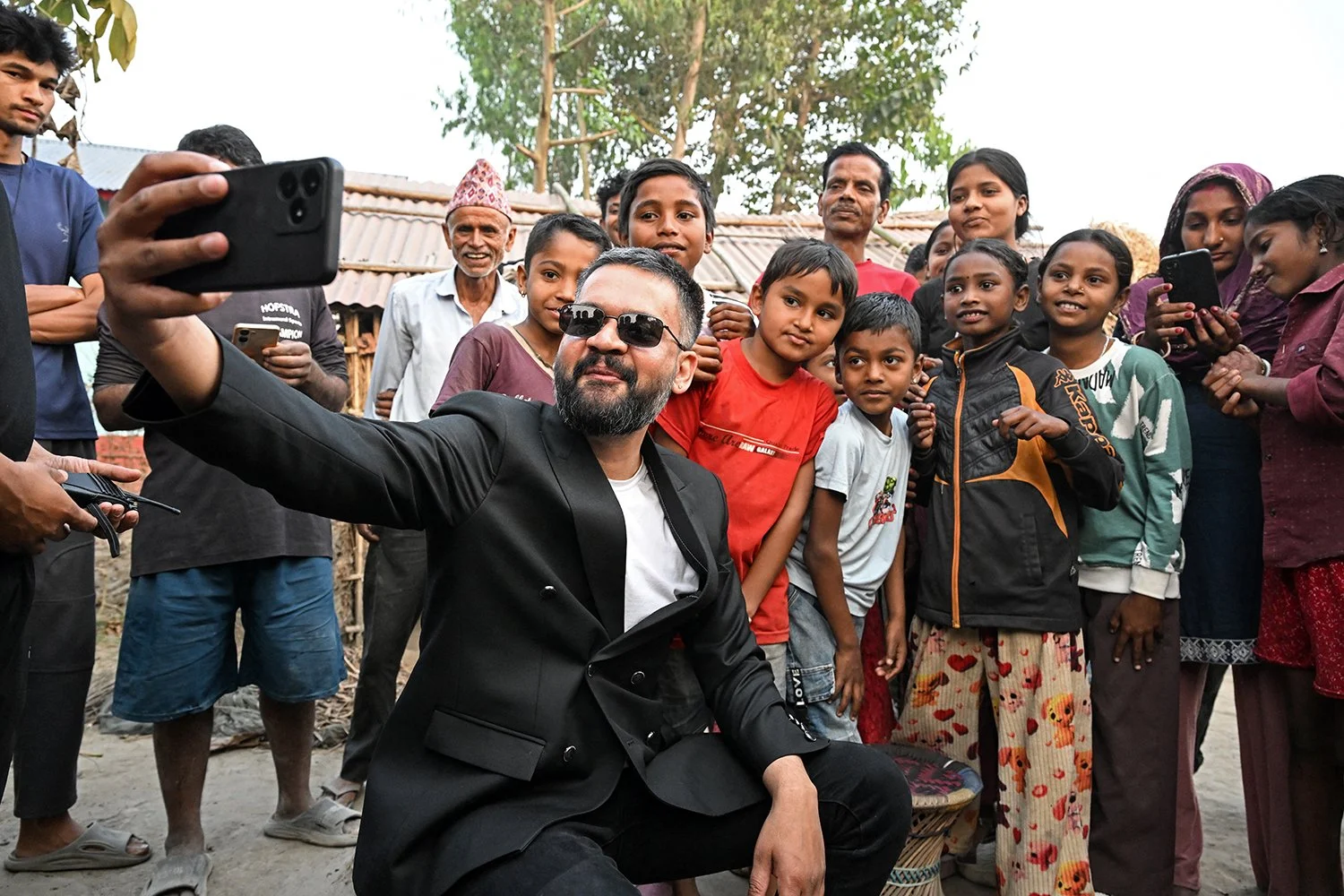
Balendra Shah takes a selfie while campaigning in Jhapa, Nepal, on Feb. 16. Image: Prakash Mayhema AFP.
Shah’s campaigning was tightly choreographed, with a 660-member team handling social media alone. His speeches were rare and brief, but drew massive crowds of thousands. In the city of Janakpur in the Madhes plains, he spoke for just around nine minutes in colloquial Maithili, galvanizing the crowd. Madhesis, long discriminated against by the hill Khas-Arya castes for their perceived loyalty to India, embraced Shah as one of their own. Although Shah has never made his Madhesi identity a cornerstone of his image, Madhesis felt represented. Shah’s win was a win for all of them—the country’s first Madhesi prime minister.
On election day, the traditional political parties were trounced. But voters did not just vote for the RSP. Many were not even aware who the RSP candidate was in their constituency; they simply voted for Balen Shah’s party. When counting ended, all the other parties had been reduced to bit players. Nepalis had handed Shah’s party a near-supermajority in Parliament.
The Road Ahead
The slew of arrests and asset investigations initiated by the Shah government since coming to power are only the first in a series of planned reforms. In its first Cabinet meeting, the government announced a 100-point reform agenda for the near future focused on improving service delivery and eliminating avenues for corruption. Among the first far-reaching decisions has been a blanket ban on party-affiliated student unions in colleges and universities, as well as on party-affiliated trade unions for civil servants and teachers. This prohibition, which was criticized for infringing on the constitutional right to political association, was temporarily halted by the Supreme Court in mid-May.
Other planned reforms are much more ambitious. The government’s plans to digitize all public services will meet with a lack of access and infrastructure. While nearly all Nepalis use mobile phones, internet penetration is still roughly 56 percent. Digital literacy is even lower, at just around 31 per cent, meaning the majority of Nepalis are unable to adequately access, process, and understand information using digital services. Bridging the stark digital divide between urban centres and rural areas will require sustained literacy campaigns and increased investment in infrastructure, both of which cannot be expected to pay immediate dividends.
“The 100-point agenda, however, does not address what is perhaps the most immediate concern—the escalating crisis in West Asia, where over 1.7 million Nepalis live and work. ”
The 100-point agenda, however, does not address what is perhaps the most immediate concern—the escalating crisis in West Asia, where over 1.7 million Nepalis live and work. There are worries that any expansion of the war on Iran could drastically affect not just the safety of Nepali migrants but also the economy back home. Remittances from abroad equal one-fourth of the country’s GDP. Any disruption to the economies of the Gulf states could have dire consequences for the health of Nepal’s own economy, which will also be battered by rising fuel prices and a looming fertilizer shortage. If things get worse, Nepal might even have to mount a gargantuan rescue effort to bring back its citizens, a task the country cannot undertake on its own.
Before the election, the RSP manifesto set an ambitious target of becoming a $100 billion economy in five years. To reach that size from Nepal’s current $42 billion economy will require a seven per cent year-on-year growth rate. At a time when the global economy is reeling from the cascading effects of the conflict in West Asia, the goal does not just seem aspirational but nigh impossible. Even before the conflict, the World Bank had forecast growth of 2.1 to 3 per cent for the upcoming fiscal year.
There are also concerns about the RSP’s rhetoric on meritocracy. Marginalized groups fear that issues of representation and inclusion could be abandoned in the pursuit of technocratic development. Whatever gains there are could thus be limited to a certain stratum of society. To its credit, Shah has ensured that women make up one-third of the new Cabinet of Ministers, even appointing a minister from one of the most discriminated of Dalit communities. The government has also decided to formally apologize to Dalits and marginalized communities and enact a series of reforms to address their systemic historical exclusion. These are comforting signs, but they are largely symbolic and will need to be followed up with concrete action and implementation.
What Nepalis know all too well is that promises made during elections are easily broken. The supermajority handed to the RSP is thus not only an opportunity but also a responsibility. Despite repeated disappointments, Nepalis have placed their faith in a new party promising radical reforms. The Shah government has moved at breakneck speed, but it remains to be seen whether it can maintain that pace for the next five years. It will not be easy for Shah and the RSP to fulfil all their promises, but the answer must be in the attempt.
Pranaya Rana is a writer and journalist based in Kathmandu. He is the author of City of Dreams: Stories and runs the newsletter Kalam Weekly.