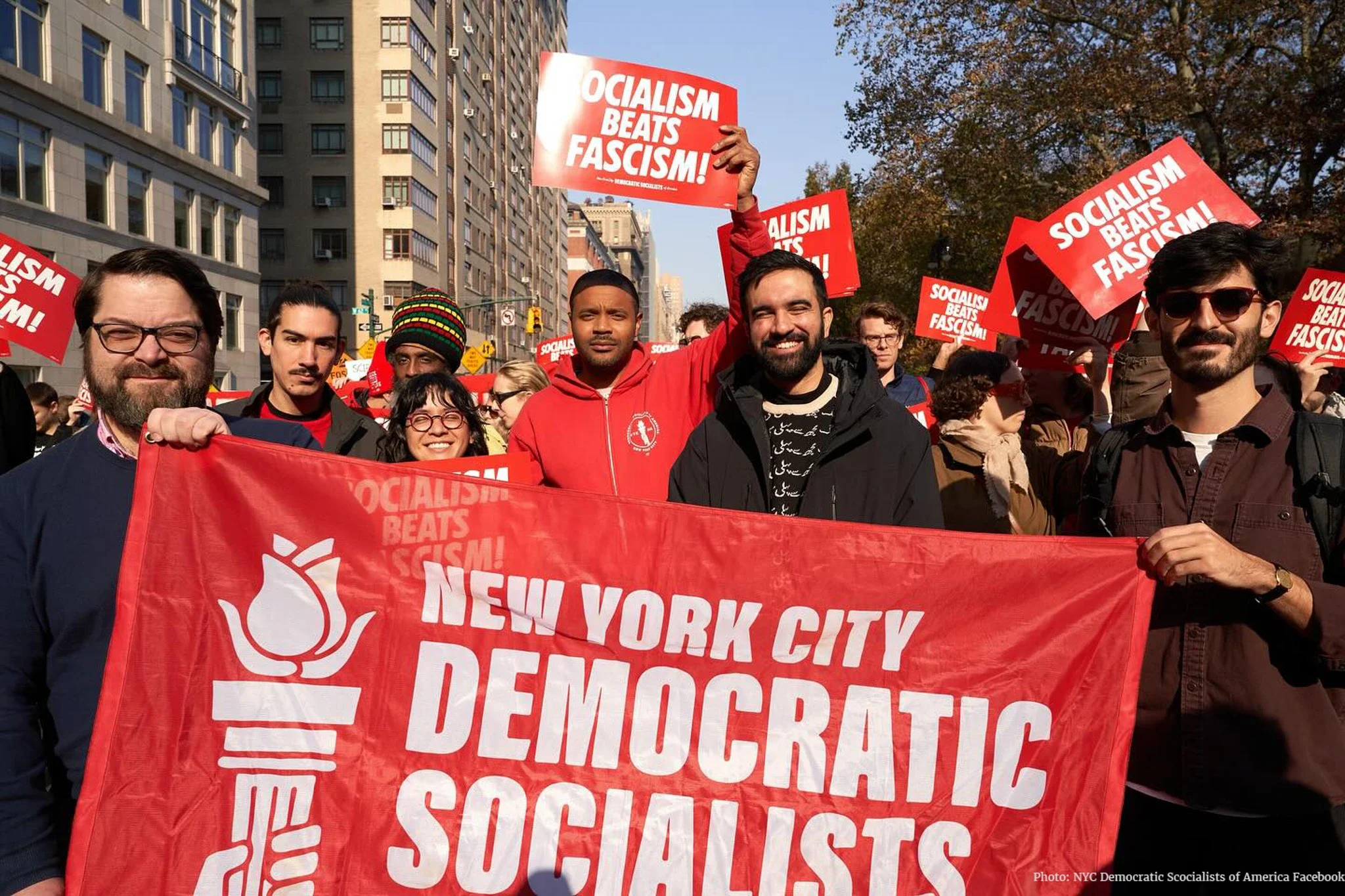
An interview with Ashik Siddique, co-chair of the Democratic Socialists of America
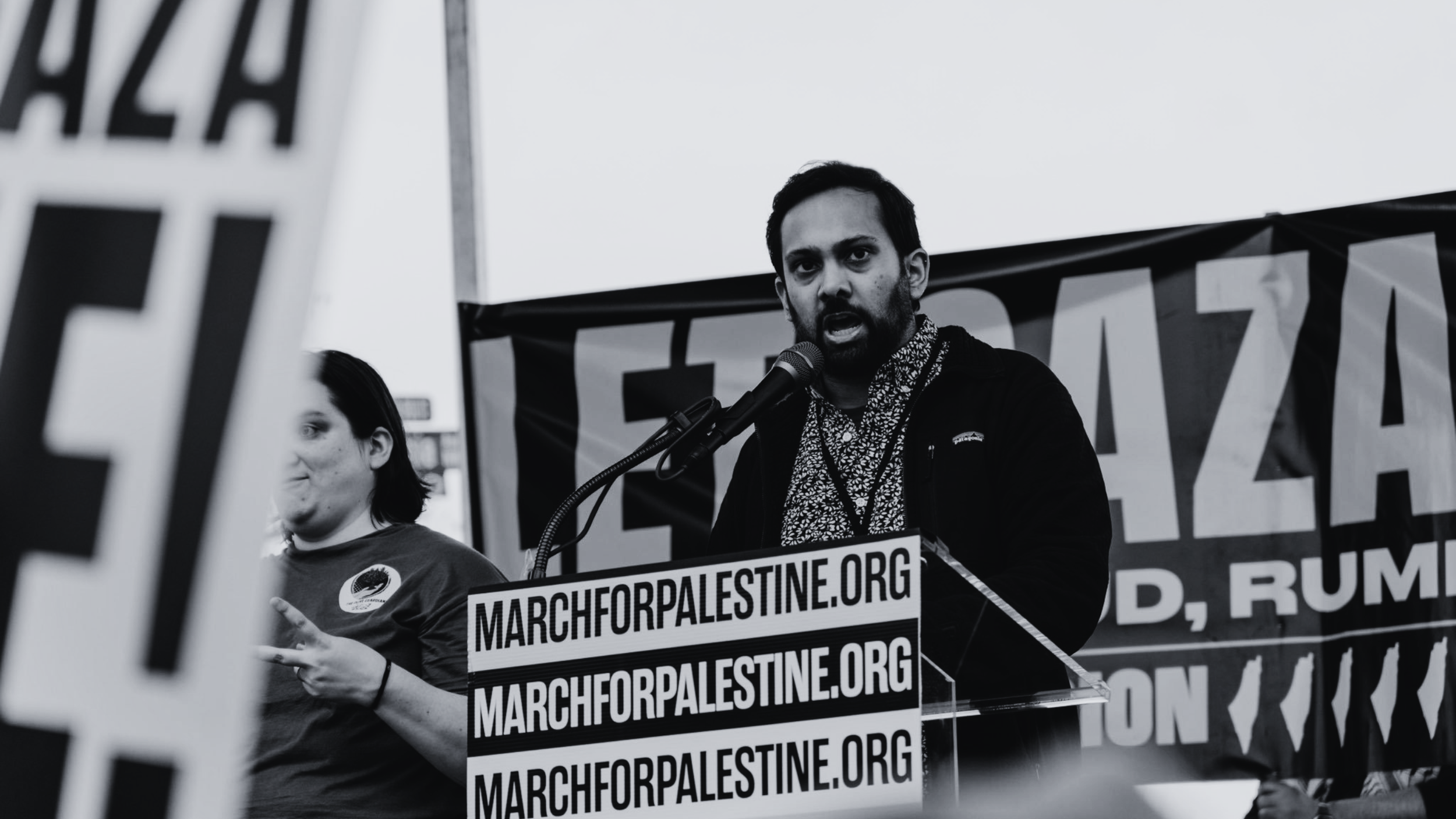
Watch the full video interview here.
Editorial Note: Since the interview, the Democratic Socialists of America (DSA) secured major victories in the 2026 Midterm Elections in the U.S. on November 3, 2026. DSA contested 222 races (including ballot measures) across federal, state and municipal levels, and at the time of publication, won 135 of those races (38 are still to be called). Significantly, DSA is now sending 8 Democratic Socialists to Congress in 2027 - an electoral power not seen since the prominent American socialist Eugene V. Debs garnered a million votes in the 1920 Presidential Election.
Nafis Hasan (N): Hi, everyone. Welcome to Jamhoor's podcast series. My name is Nafis Hasan. I'm one of the editors for Jamhoor. And today, we are joined by Ashik Siddique, a Bangladeshi American, who is also the co-chair of the Democratic Socialists of America, the largest socialist organization in the United States. Welcome, Ashik, to Jamhoor.
Ashik Siddique (A): Thanks so much for having me, Nafis.
N: So actually, we wanted to invite you to our podcast, you know, to talk a little bit about all of the media attention that DSA is currently getting, also as the largest socialist organization in the belly of the beast, you know, the dying empire that is the United States, and to sort of talk a little bit about what we are seeing with Zohran Mamdani's win, the rise of the South Asian electorate, the diaspora being very active in the leftist spaces, and all that other good stuff, but I wanted to start off asking you about, tell me how did you get involved with the DSA? What was your political evolution? Because, you know, as a fellow Bangladeshi, we are always taught that politics is not something you should touch with a 10-foot pole, especially if you're coming from the middle class, right? So how did you get involved in all of this?
A: Yeah, well, I'm used to telling the story of my political development mostly, you know, to American audiences, so there's a way in which like a lot of the things that brought me into politics tracks what the American millennial experience. Like I grew up in the 90s. I went to public schools and then grew up after 9/11. Like I came of age, I was 13 years old when it happened. I grew up in New York City, in a Bangladeshi Muslim family, so that was kind of baseline, very politicizing. But then I went to college during the time that Obama got elected after the decade of the war on terror, being against George Bush and the wars in Iraq and Afghanistan and everything. But I wasn't really politically active. It was kind of like on a personal level, I started to get more interested in political organizing. After finishing university, I graduated after the 2008 economic crisis. So coming into a job market where it was just really a bad situation for anybody my age and younger. And just realizing that the expectations of, you know, if you work hard and go to school and get a good job, you might… you'll probably do better than your parents or like, that's the expectation. That just really wasn't the case. Like very quickly that perception changed. And then a year after I graduated college, Occupy Wall Street happened. I was in New York City at the time working at a job with bosses who were very challenging to deal with. So that just kind of woke me up to how much was not changing politically with Obama in office.
When Obama got elected, I was very excited. I went to some events during his campaign, but then when he got elected, it was like, all right, he'll take it from here. Like that's what the campaign itself said. So I just checked out of paying attention to political news for a few years.
Even until that time, there was not a sense that politics was something you could do as a normal person. But then after the Occupy year, just like showing up, being at Zuccotti Park, with all these people on the streets, and just really feeling how much was not changing, was even getting worse, like economically, the wars were continuing, just all these things that really weren't changing structurally at all in the Obama administration just kind of activated me more. So I met a bunch of people through that who got me more interested in climate organizing. I did that for a few years, and then when Bernie Sanders ran for president in 2016, 2015 to 16, I became super activated. As a volunteer, I was running phone banks out of my living room. Meeting all these people from all walks of life who were connecting with different parts of this platform, like very diverse. So that made me feel a lot of agency, kind of for the first time, like with just normal people coming together for some kind of political change. I found a Facebook group during that campaign called Bangladeshi Americans for Bernie Sanders. I was just like, who are these people? What are you talking about? Bangladeshi Americans for anything? Like, I've never seen Bangladeshis activated politically in the U.S, you know? So it was just a Facebook group of, like, a handful of people. I DM'd them, just like, who are you people? Can I join? Like, I'm a Bangladeshi American for Bernie Sanders. And they were from all over the country and figuring out how to organize for Bernie to talk to Bangladeshis in their communities in New York and Los Angeles and Texas. And yeah, I just refreshed my very basic Bangla skills, which are not very good, but there was like a Bernie Sanders campaign template for graphics and stuff that they would let volunteers translate. So I did the Bangla translation for “Not me, us” like “Ami na, Amra.” And I was very proud of that. Like, I'm not a graphic designer, but I was able to do that. So yeah, that was really exciting. I met a bunch of cool people from across the country through that. Then he didn't win, and I joined DSA in January 2017.
An image from a 2016 article documenting Bangladeshi Americans’ mobilization efforts in support of Bernie Sanders’ 2016 presidential campaign. Image: Bangladeshi Americans for Bernie
I was in DC, Trump got inaugurated, and I was just — I had already been depressed after Bernie lost, but then just felt like I had to do something. I figured, okay, I guess I'm a democratic socialist. I supported Bernie. What does that mean? And DSA was there. Also, having done climate organizing, I got more interested in, or I found more kind of socialist analyses of why the climate crisis is so bad, like, why isn't anything really happening politically on the scale that it would need to, to deal with the scale of it? And so, eco-socialism is something that I started to find more and more, and then I met a lot of people through DSA, including you, in those early years, and then that really helped us develop a democratic socialist program against the climate crisis and figuring out how we organize in our communities for things like public power, expanding public transit, all these things.
So I think I started with my standard story, but then I could say more about what really politicized me from my family's background which I think is more interesting to the audience we're talking about.
N: No, yeah, please. I do want to comment on the fact that… on the Bangladeshi Americans doing anything political, because in my… I've been… I didn't grow up here, right? But since I've been here since 2007, my experience has also been that Bangladeshi Americans are more interested in holding up the cultural aspect of their identities, rather than recalling or hearkening back to the political roots that they come from, so I’d be very curious to hear about your family's history and how that inspired you.
A: Yeah, I guess just since I already started talking about Bangladeshi Americans for Bernie, I was really struck in that period, during the few months that I was active, just, they were, I would say, mostly probably millennials, some were a bit older, some were a bit younger, but it was just very much about our context as Americans that politicized us. Some of us were interested in things like the climate crisis, which definitely impacts Bangladesh a lot, and that was part of our consciousness. Being anti-war and anti-imperialism, I think some people were more motivated by that, but mostly it was just… we came of age in the United States, and the economy increasingly sucks. We're really unhappy with what's happening here. But then the Bangladeshi politics… I had been definitely raised and conditioned from a young age to not pay attention to it. I would ask, you know, as a curious young person who paid attention to news and stuff, I would ask what's happening in Bangladesh? It's in… you know, I'm seeing a headline about an election. My parents would just be like, don't worry about it, it's too messy. And I remember there were times growing up, like, there's a big Bangladeshi American community in the tri-state area that my family was part of, so I remember being at dawats, like, events and things where sometimes political things would come up, but they would be speaking in Bangla at a level that…my Bangla is not good enough to understand big words, especially political stuff. Just looking back, I realized, there was actually a lot of political content to what they were saying, and people would get in arguments about BNP, Awami League, all this stuff, and it would get really heated, and I remember times where people would almost get into fist fights over political arguments.
N: I mean, they did, right? Even recently, there was an almost fistfight between Awami League and BNP supporters in New York City, which is, you know, totally tangential, but over the years, there has been fistfights in New York City between those two parties. But that's something that's so ingrained in Bangladeshi culture. Even if we are told like don't look at politics, we're constantly talking about it. People have so many political opinions, from the rickshaw walas to the people running the tea stalls, to any dawats you go to, even in upper-middle-class society, everybody has an opinion about the political situation, but just commenting on it, not participating in it.
A: The more I learned about it as I grew older, the more I realized, like, oh, because there are real serious stakes and there's political violence, and the whole history of Bangladesh through independence and since then was really violent, and there was just realizing…learning more about the US role in all of that is something that I became conscious of much later. But I guess just zooming out and starting from a very early age, I grew up hearing stories about my parents' experience of the Liberation War. They were teenagers in 1971, so they immigrated to the United States. My dad came in the 70s, my mom came in the early 80s after they got married. And they were some of the earliest relatives, like, over the next decade or two, a lot of their siblings came. So I grew up with a very large extended family, mostly in the New York area. My cousins were all, kind of a decade older or younger than me. All of our parents were very proud of their Bangladeshi heritage. The stories about the war, like, that was just, 1971 was just, like, deeply something that we grew up hearing stories about. We went to Bangla schools for a few years, on weekends, in Queens. There was a lot of pride in Bangladeshi culture that was very political about the experience of becoming independent through this bloody struggle. So I grew up with this very intense national pride that comes from the experience of a national liberation revolution, and then a lot of my peers, like in school, who were American, just didn't even know what Bangladesh was. So there was this kind of extreme diversion between this pretty intense Bangladeshi national pride, and my friends at school or teachers barely knowing what Bangladesh is. So I feel like that really shaped me at a basic level, just…there's so much pride in the language, right? All Bangladeshis are so proud of the Bangla language, and just the experience of having a revolution be based so much on the language and cultural identity, but then, there's no Duolingo for Bangla. This is something that comes to mind every so often, especially when I'm around other Bangladeshis, how is there not a Duolingo for Bangla? And it kind of is, like, I think…I mean, this is a whole tangent, but just Bangladesh never became, or Bengal never became an economically important region, and that was because of colonialism and imperialism. It used to be one of the wealthiest regions in the world, so I think Bengalis have this sense of historical heritage and pride in the culture and language and the former economic status, but there's such a huge divergence between that and where it is now. So I think for people in the diaspora, it's kind of even more intense. Like, just reflecting on how I grew up, there's this really intense pride in the language. I have uncles and aunts who would always be like “Bangla bolo,” you have to speak Bangla, at our family things. You're not at school, here, you speak Bangla. Because you have to learn, people died for this. In American culture, whatever, it's just like, if anybody knows anything, it's (Bangladesh’s) very poor and they're screwed over by rising sea levels. That's kind of it.
There was this kind of…I learned the term double consciousness later in life, W.E.B. Du Bois, just wrote really well about the experience of Black Americans, having their experience with people of their shared identity, but then just feeling totally on the other side, or also being forced to see themselves through the view of the dominant identity, or like people who have power. So it was just that sense of like, okay, I have this very intense understanding of myself in this heritage where there is a lot of pride from becoming free in this way, but then that's totally ignored or discounted.
So I think that discrepancy made me over time think more deeply about what is my role in America? With cousins or other friends who are Bangladeshi Americans, I feel like that kind of did, there's a sense of where do you really belong, right? This is very common for any immigrant background person. But it just weirdly felt even more kind of…you have to find other means to define yourself, I guess.
Maybe it's different now for Bangladeshi kids growing up today, because there are way more Bangladeshi Americans now, in New York or LA, and in a bunch of cities, there's a huge diaspora now that's getting politically organized, which is amazing to see, which we could get into with Zohran, because Bangladeshis in particular were a big part of that, but yeah, I feel that kind of gap between just the different communities I was part of just helped me develop my identity and sense of the world in a way that wasn't too attached in either direction, I guess, and helped me kind of see things more systematically, maybe? Because I think Bangladeshi nationalism has its own problems, which we've had a lot of conversations about.
I think the diaspora attachment to 1971 and the Liberation War, I learned the history more like, well, then it got really complicated, didn't it? So I think my parents' generation, just were really focused on a particular review of everything that happened, leading up to and through that year. But then the reality of political development in Bangladesh, it's… very messy and complicated, and now, the past 2 years, right? Everything that's happening, that's causing a re-evaluation of the history, which I know is very thorny territory. It's so complicated. So I guess just to go back to the experience of meeting Bangladeshi Americans for Bernie Sanders and figuring out what do we do in the United States? That's where we are now. We're understanding all these things about global capitalism and imperialism and all these things, like the climate crisis, all these things that make it very challenging for people in Bangladesh or in that part of the world. What can we do in the United States to change the political conditions to change everything?
What would it take to change the power structure of the world, so that people in a country like Bangladesh aren't just forced to make pretty horrible choices. I could ramble in a lot of directions here, but I think just that was a big part of what got me interested.
I haven't even talked much about climate stuff, but I think that was really a lot of things that led me to be much more concerned about the climate crisis, earlier than a lot of people on the left in the US, or feeling like there is this kind of moral imperative to organize in the United States somehow to change it so that people in Bangladesh have a chance. Especially the experience of seeing the climate crisis through the lens of colonialism, understanding what happened in 1971, and Bangladesh's liberation coming out of this global colonial system, and the genocide that happened in 1971 was an outcome of that. That’s in Bangladesh's past that my parents raised me to understand. But then just the knowledge of the climate crisis as this future or ongoing catastrophe that could get way worse. I think that was another kind of double consciousness of just being like, oh, this is extra fucked. So, sorry, can I curse?
N: Yeah, yeah. That's allowed.
A: Just checking. Do we have impressionable young South Asian children?
N: They already know what that means.
A: We have worse words in our languages.
N: Yeah! Yeah, exactly.
A: So, yeah, I think understanding the legacy of genocide in Bangladesh was something that also was a deeper part of that double consciousness, where I grew up understanding there was this catastrophe, this really traumatic world historical atrocity that happened, and then, in the United States, growing up with, education about the Holocaust, for example, and, there's a whole other thread here about… I mean, in the past few years, I think with Palestine organizing, a lot more people are evaluating that in terms of the Holocaust exceptionalism. For people on the left, the point should be that all genocides are bad, and this should not happen anywhere.
I identify with what Jews and so many other people went through during the Holocaust that were being taught about as, like, the worst thing that can ever happen, and that gave me a really basic sense of empathy, and my family lived through something like that, too, and that should never happen, but then also the kind of discounting of that experience. I remember bringing it up at some point in school, maybe in fourth grade, when we were reading a book, an account of somebody who survived a concentration camp during World War 2, and just saying something like, oh, genocide happened in Bangladesh too, and the teacher kind of said something, I don't remember exactly what it was, but I remember it made me feel bad. It was just like, well, that's different, or like, this was the worst one, like, that kind of thing. And I remember feeling like that's not fair, in a very basic way.
So many other genocides and mass atrocities have happened through the 20th century, or for longer. Mike Davis had the book, right? Late Victorian Holocausts, which I still haven't read, but I feel like I get the gist, like I want to read it…
N: It's definitely interesting you bring that up, because, as you're talking about the climate organizing space as a big influence in your thinking and development as a socialist, I was also thinking how there's natural disasters or climate events that precede revolutionary changes.
To give the example of Bangladesh, the Bhola cyclone in 1970 that precipitated, and the response by the Pakistani government at that time to the the devastation in East Pakistan at that time was one of the big motivating factors for people to feel like they were an internal colony who were neglected by the West Pakistani administration.
We both organize in climate spaces and it's a bit of a weird feeling when you understand that time works differently in that space, especially in organizing. We have only indicators or approximations of how bad it can get, and the timeline of it, but then things can get much worse, much faster, which we're seeing now. Even 10 years ago, when we joined DSA almost at similar times, the idea was like, oh, we have more time than we thought we had. But like now with the prediction of the El Nino for this year, the outlook is much worse than what we had predicted.
That was a very interesting thread. I have so many more questions, but I do want to focus a little bit on the part about where you said, you see a lot more radicalization among the South Asian diaspora, after Zohran's win. I want to kind of talk a little bit about that. Because Zohran Mamdani's win as the New York City mayor is arguably one of the biggest electoral victories by DSA…and also maybe in the US for the left in the last decade or so, just in case that I don't know something that happened, I'm just going to predicate that, so top three, top three wins ever in the left, in the current century, just, like, hedge all my bets.
But what was interesting about Zohran's win was this analysis of the rise of the Muslim electorate, or the South Asian electorate. And not just the electorate, but also the mobilization around him by not just the standard bearers, like for Bernie it was pretty expected that millennials who are college-educated, they are going to bat for Bernie, but for Zohran people who voted for him, who canvassed for him, it was regular, everyday people. I don't know how many times he has called out Pakistani aunties or Bangladeshi aunties.
That's just such a very niche constituency who (you) would never expect to see on the streets to go canvassing or even vote for Zohran because of the political stuff that we've been discussing, the attitude towards politics.
How was Zohran's campaign different from other South Asian progressives, like Pramila Jayapal, when she ran, or continues to run in California, or even Ro Khanna, or even in New York City, Shahana Hanif's, like, previous elections. As somebody who grew up in New York City, how do you see the change in the political attitudes of the South Asian diaspora?
A: Yeah, I think it's a really big set of changes that are happening. I think, at the core, it’s that there is a working-class constituency that's really developing. Working-class formation is happening in a way that I haven't really seen in my lifetime with the communities of more recent immigrants. When I say community, it feels even kind of flattening in a way, because for so many decades, like when I was becoming more politically conscious, there's a sense of just different immigrant groups or ethnic groups being distinct communities.
I think the Democratic Party does a lot of identifying different constituencies as communities based on identity, and then kind of treating them in isolated ways that way. Like, oh, there's the black community, there's various Latino communities, there's LGBT community. Like, whatever else it is, and then just kind of treating them as distinct, and defining people that way, based on identities, while moving more and more away from an understanding of [the] working class or especially labour. Just like the backbone of all the major social and economic gains of the past century was a strong labour movement.
Like, organized workers across different sectors having organized power to challenge capitalists who have a lot of power politically, and that was a core part of what made the New Deal possible, or environmental gains, or civil rights, or loosening restrictions on immigration in the 1960s – which allowed my parents to come the next decade. So all these things happened with a much stronger labour movement and workers being more organized. And a lot of that was, in the past 20th century, it was like a lot of immigrant workers. Then it was mostly what we would now call “white ethnics”, like, Eastern Europeans or Italians or Irish or whatever. Today, the working class in the United States broadly is immigrants from South Asia, the Middle East, Latin America. So there's a lot of Muslim immigrants. There are obviously many others. Like I think in a lot of cities, Mexican immigrants are a big population. In New York City, there are a lot of different kinds of Muslim immigrants. Like that's just a huge population. And that's just my vantage point is knowing a lot of Bangladeshi Americans in New York City, but that's grown a lot, just in the past two decades. Like when I was a kid, I grew up in Bay Ridge in South Brooklyn and we were among very few. Like, I remember being in a class where I was one of three kids who were not specifically Irish or Italian Catholic. It was, like, me, a Sri Lankan kid, like, one who was Korean, maybe one or two who were Jewish, but, like everyone else, was, like, Catholic from Ireland or Italy, second or third generation, or however many generations. So, but Bay Ridge now has become very Arab, and particularly Palestinian. Like, it's the highest concentration of Palestinians, I don't know about in the US, maybe in Michigan or something, there are more, but that's just changed a lot over the past two decades. There are whole neighborhoods of New York now that are lots of Bangladeshis. There's, like, three different little Bangladeshis at this point. There's, like, the one in Kensington and Brooklyn, there's Queens, there's one in the Bronx. So that developed, I think, like, I haven't lived in New York in over a decade myself, but when I was a kid, there was, like, Church Avenue in Brooklyn. Like, my parents would go grocery shopping there. That's a district that Shahana Hanif represents. So she got elected a few years ago with a lot of support from that community getting more politically organized.
So with Zohran, I think when he decided to run for mayor, there was already, like he already had done a lot of meaningful work as an assembly member for four years with different sectors of workers. Like taxi workers, like kind of famously now, like he went on hunger strike for two weeks. With taxi workers who are on strike for a new contract for higher wages, like all these things. And that was a very intense struggle that this whole set of workers in a community had been going through for many years. So he was part of that fight to win gains as workers, and then he helped advance tenant rights in a lot of ways. So, there's an organization that's really important to his success, called DRUM, Desis Rising Up and Moving, which is an organization of, mostly, South Asian, like, workers and tenants, throughout New York City. So it's not just…
Zohran Mamdani at a DSA campaign for his 2025 mayoral election. Image: DSA
N: And mostly women, right? Like it’s led by aunties, as a lot of them say.
A: Yeah, totally, yeah. And I’ve met a bunch of their core organizers. Like they have some millennials and younger people too, who are bilingual and help do a lot of the translation work. Like, I met a bunch of them while canvassing for Claire Valdez, and like some of the New York candidates a few months ago. So, they had built up this really extensive network that’s now very useful for electoral organizing. Like they’re able to do all these canvasses in Bangla, for mostly people who are mostly monolingual speakers of Bangla, or you know, much more fluent in Bangla than in English but are taxpaying citizens in New York, so they can vote, but weren't really activated to see anything that that would advance their needs as workers, as tenants, as as working class people.
So, I guess the point I'm getting at is, this is not just about identity representation. Zohran, I mean, it's powerful that he's Muslim, that he, you know, people see someone who looks like them, who speaks their languages or, you know, understands their culture well. That's all important and part of his success. Like, that's part of why, you know, when he does a video in Bangla, it goes viral in Bangladesh. Like, I get relatives in Bangladesh, like, sending things to my parents in WhatsApp.
N: It’s amazing, yeah.
A: It’s incredible. But that comes on the strength of that organizing on the ground that's around shared class interests. It's about making things better for workers in New York City, many of whom are South Asian and Muslim. It's about making housing affordable. So organizing people as tenants, as, you know, helping people afford a home. That's a core part of it. So it's not like a superficial identity thing. Just like, look, well vote for me because I look like you. That's a part of it, but it's really on the strength of this really powerful community organizing around class interests, and labour unions are a core part of it.
There's a bunch of, like, I think the Taxi Workers Alliance endorsed him pretty early. labour unions like UAW, that's local that increasingly has worked pretty closely with New York City DSA. Public sector workers came out and endorsed him in a way that they hadn't really intervened in a primary before. But DSA members who were part of that helped make that endorsement. So all these things started to come together. And he also, for the better part of a year, he was going to like different Masjids, like around the city, like every weekend, basically. And really just speaking to people directly about the platform. Like that's where, what he campaigned on, was critical to success across the board. Anybody paying attention saw that they were, kept hearing it reinforced. The top three demands were freezing the rent, fast and free buses and universal childcare. He was saying that to all these uncles and aunties at Masjids. He was saying this to like, you know, people at parties in Bushwick and Bed-Stuy, like the hipster neighborhoods. He was saying this to, you know, whoever. So that's how he organized this really powerful coalition of people across identity differences, of race, ethnicity, religion. And that was really something that I, I haven't seen really anywhere in the country, this powerfully. And New York City is the largest city in the United States. It's the wealthiest city in the world, and it has a very large and diverse working class. But it takes a lot to organize working class consciousness, because the working class in the US is very divided by especially identity things. Along racial lines, along different, like different immigrant groups are pitted against each other. And that's also where I think Zohran's success in bringing people together across these differences, especially different immigrant groups, is such a big change from just 4 years ago. Where Eric Adams, the previous mayor, was elected in 2021 as a former police officer who just really played that up. And he got a lot of working-class support, especially from immigrant communities, from Black New Yorkers because he really hammered these very divisive concerns about public safety, like fears of, you know, the wrong kind of people coming in, like very anti-immigrant sentiment. Like I started hearing in my family network, just people who had been voting Democrat for years, like, start to say things about, like, oh, well, these newer immigrants, like, the undocumented immigrants are causing all these problems, like, they're causing crime, they're using all these public services, like, just pretty reactionary framing. So, like. that kind of reactionary framing, pitting different immigrant groups against each other, that's something that the Eric Adams administration did really well, in ways that were very scary. Like, I started to… Yeah, just hearing people in my life, like, start to say these things was very concerning. And I think this is a trend across the country, where in bigger cities that have a history of being Democrat-dominated, these kinds of reactionary framings, like just scapegoating immigrants, cutting public services, raising rents, like allowing real estate developers to drive up prices. Like, this is a trend across the country. So, that makes the Zohran coalition, and what New York City DSA helped make possible, even more powerful. That they were able to say, no, the reason for getting priced out is real estate developers having too much power. We need to organize to do things like freeze the rent, to expand affordable housing, to expand public transit, to help make the cost of living affordable for all of us. And that can bring people together instead of just allowing blame to fall on very vulnerable people in society. So that's been a really powerful shift over the past year, and that comes from this on the ground organizing, especially of workers and tenants who are South Asian.
N: Yeah, I think that awakening of political consciousness is so fascinating and interesting, because also, in the last round of elections where New York City DSA had some huge wins, one of the big wins was David Orkin, right, in Assembly District 38, which represents… yeah.
A: I love this example because he's actually New York City DSA's first white man that they've endorsed in the better part of a decade.
N: I know. And he won in an area that has primarily South Asian immigrants, and which area elected the first ever South Asian woman to go to assembly, right? Like Jennifer Rajkumar, right? So that was, like, the encapsulation of, like, it's just not enough to look like us anymore. You have to be able to listen to our demands, like what we really need is somebody who is going to fight for our basic rights and our basic needs, and not just look like us and give lip service right?
A: That was so powerful. I spent the last few days of the primary campaigning in that area, in Woodside, Queens, which is mostly Bangladeshi. Like, almost every door I knocked for a whole shift, for a few hours was Bangladeshi families. And a lot of them just, like I had to refresh my not very good Bangla to just like communicate. But we had all this Bangla lit, all this just, you know, just the talking points were all about these cost of living things. And we were able to point to Zohran, just like, oh, do you like what he's doing? We want to elect more people who are going to do it. And they were like, okay. And it was David Orkin, white guy, or he might be mixed, I think he might be part Mexican, but, you know, presents as a white man.
N: Sure, but it's like such a distance from like, having a brown person represent you.
A: The point is it doesn't matter, you know? He can present as a white man and because he's campaigning on these things and is aligned with this broader political project around these demands, that's the basis for winning. And, you know, he was showing up. He was talking just, showing up all over the place for months. He put out videos and things and literature in Bangla, and…
N: And had Bengali uncles who had full beards coloured with mehendi…
A: With the mehendi beards, yeah..
N: Yeah. And I got to say, this is kind of an aside, because canvassing for Zohran in Astoria, right, which is a Bangladeshi stronghold. Canvassing in Bangla just hits different. It just is a whole different level of communication that you can do, where they won't turn you away because you're speaking that language. They'll be like, oh, wait, he's saying something in my language, and they're, like, actually curious, and some people ask me, like, why are you doing this, you know? Like, why are you, like, canvassing for this guy? And then you get to talk to them, right? Besides, like the standard pitch, right? So, it's a next level of like, communicating that that is like, so that's so amazing.
DSA candidates (L-R) Diana Moreno, David Orkin, Samantha Kattan, Aber Kawas and Claire Valdez celebrate their victories in the June 2026 New York Democratic primaries. Image: Ryan Schwach via Queens Daily Eagle
A: Yeah, it's incredible. And it's because like the reason, I mean, yeah, I've heard that question from other canvassers, especially in these areas where people are asking like, who are you? Like, who's paying you? You know, it's just like, no, because we really care about these issues and these policies that we all can benefit from. Like, we have a shared interest here.
That's why we're volunteering our time, spending our Saturday or Sunday talking to strangers in a language we don't even know. Like, there are DSA members who are white or Asian or whatever, who learned Bangla phrases, you know, like, “kemon achen?”. You just had this basic connection, which is just so, like Americans, especially are very alienated from each other like we don't have, you know, there's like your family sphere, your work sphere, and then maybe you have some other hobby. But that's kind of it. And in most of the country, especially New York, you know, it's not normal to talk to strangers, or it's even, like, people are suspicious or feel even hostile. But we're in a moment now where just so many people, like most people are feeling bad about how our society works. Their day to day lives suck. People are having to work longer hours or multiple jobs just to make ends meet. And that's across all kinds of backgrounds. So I think there is this basic, shared alienation that's happening now, that is even more reason to try to connect through politics. And that's happening in this really powerful way that DSA members are helping make possible. But then orgs like DRUM and other organizations that are really trying to organize working class people around our shared interests. So that's happening in a way that, it would have been hard for me to imagine, you know, just a few years ago. And seeing it, like, the experience of, yeah, just getting all these, Bangladeshi uncles and aunties to see a picture of David Orkin and Claire Valdez, and being like, oh yeah, they've been here, like, I know, and like, the other lady, we don't, we don’t like her.
N: That's amazing. I love that so much.
A: Yeah, and then just seeing like those blocks in particular just light up on the map, after the election results and just knowing like, oh, so many people put in the work to organize all these people around our shared interests. That's just powerful, and it comes from the solidarity that is one of…building solidarity across differences, especially of identity, of race, and language, that's one of the most powerful things that I've seen happen over the past few years, and Zohran's campaign is an example of that, and other electoral campaigns like David, like Claire, but seeing the organization around that, around these shared interests, across things that have been very divisive in the past. Racism is really deeply baked in in the United States, and I've seen, like, in parts of Queens where there's a Bangladeshi majority neighborhood next to a Black majority neighborhood. I've heard really ugly things said against Black people from some uncles and aunties sometimes, but you transcend that not by just being like you're a bad person for saying that. It's like, no, we actually have shared interests here and racism is used to keep us divided. But the things that would make this better are things that would benefit all of us. So that's where. Zohran is powerful. One of his mother's movies, Mississippi Masala.
N: Yeah.
A: It's relevant here, right? Like, just the Black-South Asian solidarity is something that I've kind of thought a lot about, because it's a kind of division that I saw coming up in New York, but also, learning about the deeper history of the Bangladesh Revolution, and then just left organizing, I came across this song in Bangla on YouTube at some point. What's it called? It's about Paul Robeson, who is, you know, [an] internationally famous artist and leftist. And it's called Negrobhayamar Paul Robeson, like my black brother, Paul Robeson. In English, it's They Do Not Let Us Sing. It's like this beautiful 4-minute song. I'm gonna find it. I think it's from this hour-long video that I found, that's one hour of Bangladeshi communist music, and it's just all these different leftist songs.
N: I love that. I think the song is… it's by Hemanga Biswas. Our black brother, Paul Robeson, Negro bhai amar, Paul Robeson, right?
A: Yeah, yeah. But the substance of the song is all about how, like, they're identifying, on the other side of the world, they're identifying with the struggles of Paul Robeson as a Black man in the United States facing racism and just inequality. And they're saying okay, our master is here, they do not let us sing, they're keeping us silent. But we see him with this powerful voice, calling for all people's liberation, and that's inspiring us to sing. It's just such a beautiful example of solidarity, and how people in Bengal and South Asia identified with the struggles of Black people in the United States. And, that's kind of a deeper history that I've learned more about over the years. Just that kind of international solidarity and consciousness that was so powerfully motivating for so many people around the world in the 20th century, but then, in the era of neoliberalism, globalization, and suppression of the left everywhere, I think that fell away. But now I think that kind of consciousness is kind of reviving. Or I think with the internet, we can access it much more easily and figuring out how it's related to the context we're dealing with in New York City or wherever in the United States.
A scene from Mira Nair’s 1991 film Mississipi Masala, starring Danzel Washington and Sarita Choudhury
N: Right. Yeah, and again, there's so many fascinating threads to pull from. And I do want to come back to this question of international solidarity, especially since I know our audience is going to be interested in that. But I do want to go back to a little bit of DSA’s internal stuff a little. Both of us are, in DSA as people of colour from, like, I think we're coming up to close to a decade in being involved. And oftentimes – and I think this is still true – that there are concerns and condescension levied at DSA as being a white majority organization, right? And you're one of the co-chairs of this organization, and how have you seen the demographics change in the last few years or since you joined? Has it become more multiracial? Or what would your response be to people saying ‘oh, I don't want to join this organization because it's for white people’, right? Which was also something that was levied against people who were going hard for Bernie. I was like, oh, they're Bernie Bros, or they're all white people, why would we ever support that, right? So, in the context of what you're saying about, it's not just enough to have that identity anymore, it's also having shared class interest, right? How do you see these concerns levied at DSA? And how is DSA as an organization growing past that point?
A: Yeah, I mean, I feel like I've been grappling with these questions for the better part of the decade that I've been in DSA. One, it absolutely is changing a lot. I think the more we organize outward-facing things like these electoral campaigns that are very intentionally engaging and empowering, and working with different kinds of people coming from different immigrant backgrounds or racial backgrounds, that is helping a lot, very demonstrably. And the labour organizing. I would say running electoral campaigns that are really strategically developed to empower and build working-class power in different kinds of communities, and the labour organizing. Those two things have really helped diversify DSA in the places that we're doing it effectively.
So like New York and Los Angeles are our two largest chapters of DSA, and both of them, I think, are really becoming just demonstrably, increasingly diverse in ways that reflect those cities. Los Angeles is a city that I think is majority, or at least plurality, Latino, especially Mexican and a lot of Asian communities, and LADSA reflects that. I remember being at their convention in the past year and looking at and being like “okay, this is remarkably different than the largely white constituencies that I remember seeing over the years in other places”. So yeah, that comes through organizing.
And when I talked about Bangladeshi Americans for Bernie Sanders being kind of a formative thing for me, before I even joined DSA. So, we really enjoyed, at the time, just countering the arguments about, ‘oh, these are white Bernie bros’, just white men who were whatever, and we were just like, ‘we're right here’, you know? And there were events that were organized in places that showed there was a serious base of people who were Bangladeshi immigrants, were second or third generation at this point, and totally activated around these issues that the campaigners are presenting, and that's the point. People of all different backgrounds are interested in these things, and now we have to organize together to make them possible.
So I kind of came in with that sense. In the first year I was in DSA in the DC chapter, I definitely was in a lot of rooms where I was one of very few people who weren't white and it felt kind of weird at a basic level. But I was there because of the politics. I was like, okay, I think I'm a democratic socialist because of these things, I need to be part of something that makes those things possible. What is going to make that possible? And, there is no other organization that can make that possible in the United States. So I started out with this very basic sense of, okay, there is no organization that can solve the problems of racism in the United States within itself. We're part of this society that is pretty racist. That is structurally very unequal in these basic ways, and you can't fix that within one organization. And, there's this idea of prefigurative politics. That an organization you're a part of, or a community group that you're a part of can prefigure, can create the new kind of structure or society within your organization that represents the future you're organizing toward. And, I think that's a nice goal, and there are ways we can start to get at that, like have practices within an organization like DSA or any other organization where you try to intentionally develop and support more people of marginalized identities to build them up. But you can't entirely, you can't just fully be a not racist organization when the entire rest of society that you're part of is still very racist. So, I think, the types of organizing we do and how we do it can help us transform the rest of society and start to really rev the engine of that kind of organizing change in ways that make us attractive to more people – people of colour, people of different identities who see that, like okay, this organization is serious about changing all of society, and I want to be part of that.
So that happens through the organizing that people see us doing. So they see us representing these policies, and activating so many people to feel how they can be part of making that change. So that's what, Zohran's campaign is such a powerful example of doing in New York, in Los Angeles, or in Washington, D.C. Like the chapter that I just mentioned being in a room of mostly white people when I joined almost 10 years ago now. But now they just helped elect Janeese Lewis George as a Black woman.
N: Yeah. Also, Aparna Raj, another South Asian leftist, as a city councilor.
A: Totally. Exactly. Yeah, let's talk about Aparna. Aparna's a good friend, and she was chair of the Metro DC DSA chapter in the years right after 2020, the Black Lives Matter uprising that was totally galvanizing across the country, but especially in DC, which has been historically a majority Black, now, maybe plurality Black. Hypergentrification has pushed a lot of people out. So we really had to grapple with that in the D.C. chapter.
When I was in leadership, I think it was, 2018 to 2019, and I was very interested in helping diversify our organization, but I just was learning through practice, through talking to other people of colour who were active in the chapter. Just like, okay, we're all activated around these politics. We don't wanna become more diverse in a superficial or tokenizing way. Which was, is a dynamic that I think can come up a lot in organizing spaces where people, with good intentions, want to help the organization become more diverse. But might just… the first person of colour they see, they're like, ‘hey, do you want to be in leadership?’ And then aren't really doing anything to support that person to be in leadership, and then they're not set up to succeed, and bad things can happen. And I kind of felt myself in that position in a very early stage. And maybe the first year I was there, I was in a working group of DSA. We have a structure that's totally volunteer, member-driven. So it's relatively easy to just show up and start doing something and then get into leadership. So I remember being asked to take a leadership position, just like, "Hey, you're showing up. Do you wanna do this?" And I was just like very quickly given all this responsibility that felt kind of overwhelming. And there were other people who had a lot more experience and were probably better at doing the thing, but who were kind of just like, well, you should do it because you're a person of colour. And that was a weird dynamic. And I ended up kind of getting support and just getting help from people, or learned how to ask for help when I needed it. And then ended up being well supported. And then I got into chapter leadership and just developed a lot of experience over two years. That helped develop me as an organizer and as somebody who could do political leadership. And then I just kept doing more stuff. I kept saying yes to things people asked me to do until I became coach over the whole organization.
N: Look where you are now.
A: Yeah, yeah. But I think all along the way, I was very, I guess part of it is just like I was raised with very immigrant, just like, you have to work hard. You always have to work twice as hard for half the credit, you know?
N: Right. The drive to succeed. You have to do something that's worth talking about, you can’t just be fucking around.
A: Yeah. I think there was a very... yeah, I mean, that that was just something I heard constantly as a kid. You know? Like, you're gonna have to work twice as hard for half the credit.
N: Yeah. Yeah.
A: And that's something that, unfortunately, I think that does still play out in ways in organizing sometimes. But we've gotten a lot better at developing structures to support people to develop as organizers, as leaders, and just distribute that work. The point of DSA is to organize democracy at every level of what we're doing and to try to distribute work. The way we do campaigns is to break things down so that somebody can come in pretty fresh without a lot of experience, but then start to learn how to do things.
Like okay, go knock doors, talk to people, learn how to use a spreadsheet to go through a list and make contacts, organize an event. Here's what it takes to organize an event, like rent out a library room or, organize a social or something. And these things can start to add up. You get more experience. Like, organize a reading group, a political education event. All these types of things that teach more and more people how to do that and then decide how to make decisions together about how to do that. And as we distribute those leadership skills –those organizing skills– the more we do that across the board and have good systems, pipelines to do that, then we can especially develop people of marginalized identities to come in and do that. Because we're making it easier for everybody.
And also the shared responsibility. It's not just… nobody's entitled to anything. Like everyone has to do some work. This is a classic Marxist thing, right? Like from each according to their ability, to each according to their means. So there is a sense of responsibility. And this is another thing that cuts against the tokenizing thing. We shouldn't advance somebody in leadership just because of the fact of their identity. They also need to be prepared to do things, to have responsibility, to be part of a collective. There's a shared responsibility that comes from that. So, I think the sense of everyone should be able to do some basic things, and have some basic sense of responsibility, and that's how we develop collective leadership. And that's a big part of what we're doing. So when we elect people as leaders in our organization, or to run for office or something, we definitely want way more people of colour, more women, queer people, whatever it is, whatever marginalized identities, that is totally a priority.
And we have to develop the systems, the structures to support people to be in leadership, to be effective leaders, and not just in a tokenizing way. Like, it really sucks if you… especially to be in the position of someone in a marginalized identity, and then be in a position of leadership and not be prepared to do it. Then the backlash can be even harsher sometimes. That's a very common dynamic in the era of neoliberal politics. I think, honestly, this is part of a big reaction against the Democratic Party, where there is this very powerful drive that's kind of tokenizing to get people of marginalized identities and positions of leadership. But then not having a program that they're organizing for to change things economically for everybody else of that identity. So it's not enough to have Black people in leadership or from whatever immigrant background if you're not actually improving conditions for everybody else of that identity who are mostly working class people.
N: So, we have talked a little bit about your journey through DSA, DSA's electoral program, but can you tell us about DSA's politics? We have been told… I mean, we know it's a big tent organization, it's a larger socialist organization. What is DSA's program? Because you said the Democratic Party does not have a program for its electeds, its representatives, right? So what is DSA's program for its electeds, for its members, for the working class, or for everyday people? And also, because you have brought up international solidarity, how does the program reflect this internationalist lens, and how are you building towards solidarity in this age of, you know, fascism everywhere, things are getting bad everywhere?
A: Yeah, we just published a national program called Workers Deserve More. You can check it out at program.dsausa.org. So this lays out a pretty expansive vision for how we would like to transform our society in the United States. So it's not at this stage…
N: Also famously quoted by the Speaker of the House, Mike Johnson, on the House floor, right?
A: Yes. That was so crazy. Yeah, they're flipping out about it. Fox News has been giving us a lot of free advertising about this program.
N: Love that.
A: So this includes things that are the kinds of things that our electoral candidates are campaigning on right now to address cost of living, things like universal healthcare, universal childcare. Things toward a Green New Deal to expand public transit and transform our grid to renewable electricity that is, ideally free at the point of service. Expanding union power. Those are all the kinds of things that we're campaigning on now, like public power over utilities, making food, education, energy, healthcare publicly funded goods. Those are things that we are advancing locally and nationally.
But then there are much bigger picture vision things about how do we transform our democracy? We are in a very undemocratic political system. The United States is kind of uniquely among Global North countries [and] is really stacked toward existing powers. Historically, it was really developed to, I mean it started with just suffrage for white males, mostly landowners effectively. So a lot of work happened through a lot of struggle over two and a half centuries to expand the category of who can even vote. But then the Senate is really stacked toward, it's a minoritarian system of democracy versus representative bodies in parliaments in other countries that have proportional representation where you can count on the principle of one person, one vote. It's not mediated by an electoral college for president, or the Senate that just stacks it towards smaller states versus larger states.
So, we want to have a system where everybody has an equal say as one human person. We want to take on the power of corporations. Right now, after Citizens United and all these things that have developed to give corporations way more power to the point where they're legally defined as people, like that's crazy to us. We want to change that. So our vision goes from near term addressing cost of living things with universal public goods, expanding union power and worker power, to changing how our political structure works. And that's a much longer-term vision. It's not something we think can happen just by voting more, or just getting more people to vote. It means we need more power in labour unions, we need to organize people in their workplaces, in their communities to transform how politics even happens.
So, there's this basic idea we have in DSA of transformative reforms or non-reformist reforms, like the kinds of things that we can advocate for as policies to reform things. But then, if we were to win them, they would just raise expectations of people to demand even more. So beyond just reforming, to transform our whole political system. So something like healthcare for all, Medicare for all would be something that if we were to win it, then millions of workers, people across the country, would no longer have to count on their employer for private health insurance. So that frees them up to maybe agitate for more rights at work, or to demand better work conditions without having to worry about their healthcare being taken away if they're fired. So things like that can just…what are the kinds of reforms we can demand, and organize to win that then make way more things possible?
So that's a basic principle, but ultimately, we want to help people envision what does life look like beyond capitalism? It's not just about having the government do more. We don't just want to have the government do nice things. To us, that's not what socialism is. We want to create a new system. We want to move from capitalism to socialism, going through the democratic structure that we have.
So the program that we have lays out, there's a nice little narrative at the top about, imagine that you take a day off from work in a future beyond capitalism. What would that be like? What would it be like to not have bills really for basic necessities because those are universal public goods? Those are things that… we see are really important to help people imagine, what does a real future look like? As we start to organize to transform things. Because there's a short-termism that's really baked into American politics in particular. I think this is probably the case across the Global North. But in the US especially, it's like every two years there's a new electoral cycle. Everybody in Congress just has to do a lot of fundraising to get elected or reelected. People are only thinking in two year cycles. So it's very hard to do any kind of longer term planning or, just thinking beyond your own re-election as somebody in Congress. And most Americans, most people have no way to engage in getting people to think about what a longer-term vision looks like. So, with something like the climate crisis, that's why there is no progress on climate at the national level in the United States, because that's a long-term systematic problem that's very hard to think about for people who are in these two year cycles. So, we want to activate millions of people to imagine what that better future looks like where we can really change things. Organize enough people to make these things possible, think about what it would be like to organize our lives and democratically be able to have a say in how we spend our day-to-day life, week to week, month to month, year to year. Like those are decisions that should be made by everyone instead of the very wealthiest people like the billionaires who dominate and profit from the way things work right now.
N: That's such a beautiful way to think about politics, right? It's like you have to be able to imagine a life beyond your current grind in capitalism. Like what else are you striving for, right? But it's so hard because even taking that time, taking the two minutes to imagine the day off is hard, because you're constantly bombarded by, how am I gonna pay my bills? How am I gonna cover childcare? How am I gonna afford to pay my rent, right? So, the program that you laid out is, like, in the near term, if you're able to alleviate these constant battles just to survive, you will have the time to look forward and be like, okay, what else can we do.
So, as somebody working in the labour movement in unions, we also have to think about this because we're constantly –employers and bosses are constantly trying to exploit their workers, even in a union environment. And you have to constantly put out fires and tell the bosses, you can't do this, it's in the contract.
But also, what about the future? What are we building towards? For example, the Medicaid cuts. Or how do we fight against the bigger things that are happening?
So can you tell me a little bit more about how, let's say in this imagination, how DSA is thinking about its internationalist politics? Because DSA, again, not to overuse the term, but it is the largest socialist organization in the United States, which is by and large, still the imperial superpower. Obviously there is multipolarization happening. There's the question of China, as we are all supposedly living in the Chinese century. And for you, for me, for a lot of our listeners who are probably listening from South Asia or other countries where the United States may not be the only imperial or superpower looking into building out extractive industries to use the climate lens. For example, there's a lot of concerns about Chinese investments in Bangladesh or in Pakistan or in India resulting in extractivism.
So, how does that play out in your mind and in DSA's entire political landscape. What exactly is your orientation towards these things? When we talk about building solidarity across geographical boundaries or across borders. What does that look like to you and DSA? Obviously you are not DSA, but, how does it figure into DSA's politics, and how do you personally think about those things?
A: Yeah, I think across the board in DSA, we have a pretty strong consensus that our role within the United States is to change American policy. We have the power to – if we expand democracy to actually allow it to be the case that all Americans can vote on what we want American foreign policy to be. We see the interest of people in the United States is to provide for things right here.
So if we had universal public goods just to meet people's needs right here. That goes against the imperative right now to spend a trillion dollars on a military budget that is just meant to militarily dominate the whole rest of the world for the profits of multinational corporations. Of weapons profiteers, companies like whoever is profiting from dropping bombs on other parts of the world, so that other corporations can come in and extract resources from the people who live there. That's not in our shared interest, if we have an international consciousness.
I think there is a wide range of perspectives about a bunch of particulars in international policy, and this has been the case as long as there's been a left around the world. There are always big questions about how do you exist in a country that is doing imperialism, that is engaging in the great powers contests? This was the case in the run up to the First World War, where leftists in Germany, or the UK, or France had very intense heated conflicts and divergences around how they engage with these questions. So those are all live today in the United States, which is still the most powerful country in the world, has the largest military. So there are real contradictions in how we relate to a bunch of particular international situations.
But I think across the board, we have a consensus across DSA that we need to end the U.S. military-imperial, however we want to define it. The military-industrial complex is a problem. We need to do away with it. We need to shift resources massively from militarism to social needs, especially in the United States. And we really don't see there being military solutions to any range of things that are seen as problems around the world. So just ending US military aid to countries that are doing genocide, like Israel. There's a total consensus on that. With Palestine, especially over the past few years, an arms embargo against Israel is a very clear thing to focus on because the state of Israel is the largest recipient of US military aid. That's just a direct thing that we should have the power to change. So that's a big core commitment.
Ending US overseas military bases is something that is not really talked a lot about politically within the US, but it's kind of taken for granted. The United States right now has over 700 foreign military bases. The next countries are Russia and China. Russia has something like maybe 20, China has 2 or 3. So, there's such a massive discrepancy there that costs tens of billions of dollars per year, maybe hundreds of billions at this point. So it's both a waste of resources, and also it helps make the whole world more unsafe. It makes people trust the United States less in places that have military bases. There are all these problems that come from just having a lot of, mostly men, just concentrated to dominate people locally. We could get into all the problems with that.
But even if we're coming at it from an angle of self-interest for people in the United States, there's a particular kind of liberal nationalist lens, I think. People have this idea, at least in the Democratic Party, that we're spreading American values, we're spreading democracy. Okay yeah, we're not going to do these wars, those are bad, but we're still going to spread American values somehow with the implicit understanding that that still is military domination. [That] we still need to have the strongest military. That doesn't work in practice. We get what we pay for. The more we invest in militarism, the more it just becomes, well, when you have a hammer, then everything looks like a nail. And that's the basis for somebody like Trump coming into office and doing this much more open imperialism. Talking about the Monroe doctrine, referring to the Monroe doctrine over a century ago, which we were taught to think was in the past. Where America was just openly doing imperialism across the Western Hemisphere. He's fully just bringing that back and expanding it. Like, oh, we should take over Greenland, we should take over… What if we start taking over the Gulf of Mexico, which is now the Gulf of America? A lot of Americans are shocked to hear this, but it's just reviving things that were said pretty openly a century ago. And now there's even more material basis for it because America has an even larger military than it ever did. We've had a military budget approaching a trillion dollars for decades through Democrat and Republican administrations alike. So Trump is now able to work with that to cause all these threats globally. But that's been enabled by both parties in power.
So anyway, we just don't see militarism as a solution to the world's problems. And what if we redirected a trillion dollars from militarism globally to solving the climate crisis, to investing in infrastructure and adaptation, expanding renewable energy everywhere? What if the United States were interested in doing that?
You mentioned China, right? There's a lot of concern, [or] threat perception about China and the United States becoming a new global hegemon. So again, if people are even concerned about it on those terms, then perhaps the United States should try to compete a little bit on those grounds. Right now, China has a plan for a future with the climate crisis. They're actually investing a lot of resources in renewable energy and solar energy and exporting it all over the world. So now countries like Pakistan recently just implemented solar panels in a very distributed way very quickly. So now they're able to adapt more to this entry, and they have China to thank for that, not the United States, right?
So we're just heading into this multipolar world where military domination by one country is not viable or strategic or useful. It's just a massive waste of resources, and it causes a lot of harm. Moreover, I don't want to think about it just in economic dollar terms. I'm used to doing that because we've been asked about policy a lot lately. But it's just caused destruction at a degree that's hard for many Americans to imagine. Like the costs of war in the Middle East since 2001, since 9/11. There's the money cost, which is over 8 trillion dollars, which is crazy. Half of that would have been enough to shift the entire U.S. energy grid to renewable electricity. There was a study that said it would have been $4 trillion, or still would be, to have 100% renewable energy across the country. So if that had started two decades ago, instead of the war on terror, we would just be in a totally different world.
But then the human cost – 38 million people were displaced across the Middle East over two decades. That's, like, the entire population of California or Canada. That's just, a scale of human destruction. I think a million people or more were killed by the wars in Iraq and Afghanistan. So this is being caused by US imperialism. By US militarism. The US war machine. It's a core commitment to end that, and everybody will benefit from that –the people who are no longer being bombed, or under threat of military invasion around the world. But also in the United States. That is a shared interest that we have to organize.
I think there are also different perspectives about well, can we do that in the US? Like can working class people in the United States really change that? Is it even in their interests? Or do they actually benefit from imperial extraction? There's a lot of discourse around this, a lot of, Marxist theory about how global systems work.
N: Right, the Global North working class can only get benefits if they are relying on this extractive model, or an exploit in the Global South, right? Yeah.
A: Yeah. Or just Marx wrote a lot about thinking about the industrial working class, like industrial workers in the 19th century, who were in countries like the UK and Germany and the United States. It’s not wrong to say that a lot of those industrial workers now, the industries have been shifted to Global South countries, countries like Bangladesh or China or Vietnam or wherever. Bangladesh's economy today is very driven by garment factories. The types of garment factories that existed in New York City or in London over a century ago, but now they're in places like Bangladesh. So I think there are people in the US, or leftists throughout the Global North, who feel like, well, maybe they are the revolutionary subjects of the 21st century, and our role in countries like this is just a question mark. Like, what is our role? Do we even have a role? Maybe it'll just happen there.
N: Right.
A: I mean I feel pretty strongly, from my life experience and everything, like one, I see the potential being enacted to organize workers in the U.S. who are increasingly diverse. It's not just white people. There are these real examples of solidarity across differences based on shared working class interests here. We just have to keep doing that more, more and more across the entire country, like organizing people from all sorts of working class backgrounds.
And we're seeing results of that. We're seeing that in New York, we're seeing that in Michigan, where somebody like Abdul El-Sayed, who's not a DSA member, but has a lot of aligned goals. Detroit DSA just scored a huge win with Donovan McKinney for Congress, who's black. He's the first black Congressman in a while. I think the largest majority black city in the country is Detroit. So they're the only city that is fully represented by Socialists now in office; Rashida Tlaib and Donovan McKinney.
Which is a powerful example of Black Palestinian solidarity. Just organizing major parts of the working class of Detroit across these differences, around shared interests. So that's really important, especially when we're looking at the Great Lakes region.I've been in the Great Lakes region a lot lately from Michigan to Milwaukee. Wisconsin had a great race recently with Francesca Hong, who came pretty close to winning the primary.
N: 0.4%. What a close race.
A: Yeah, and so Wisconsin revived a lot of interest in sewer socialism, which was a political tendency in the early 20th century where Milwaukee was the basis. The Socialist Party then helped elect a bunch of people to Milwaukee who expanded public services. Just things like sewers, water treatment, and expanding quality of life in very basic ways through public power, and were openly socialist. And they were reelected for decades. They were very popular. And there were a lot of immigrants at the time who were part of that working class base. There are a lot of people who moved to Wisconsin and Minnesota in the 19th and 20th centuries who came from Scandinavia or other parts of Europe, who were a big part of that socialist…
N: Also, Rashida Tlaib's father was very involved in the UAW, famously the UAW strike in Detroit, right?
A: That's right. He was an auto worker in Detroit. Exactly.
N: Yeah. And he was an Arab Palestinian autoworker. Who organized his community to support the autoworkers on strike and gather around that. That was one of her key — she describes it as one of her key moments of politicization early on in life.
A: Yeah, exactly. So, often in the United States, there's a perception of, when people say working class, they imagine a white factory worker who's blue-collar and just coded in conservative ways culturally. But it's way more diverse than that, and we just can't essentialize people around identity factors. The point should be organizing actually existing workers for real things people can imagine, and help expand people's imagination through the kinds of campaigns we organize, the fights we pick, and then what we win.
So anyway, I just have been thinking about that, the sewer socialist history, and socialism in the United States over a century ago, which was a major part of American politics. And that was very immigrant coded. It was very shaped by immigrant workers at the time. So a big task of today is refreshing that with the actual existing workers, many of whom are immigrants today. But just organizing people across those differences. And that's a big part of renewing American society, but across the world, like that international consciousness is important to bake in.
And, it's already happening. It's happening, and we just have to keep organizing more quickly than the fascists are. To scapegoat immigrants and fear mongering in all these ways while stripping all of our public services for parts. So the more we organize this way around people's shared interests here in the United States, that helps build that international consciousness, especially because so many people are immigrants from parts of the world that experienced colonialism, imperialism, all these things.
So, I bring it back to the climate crisis. A big question globally in climate politics is how can we get enough money invested from the countries that benefited from colonialism, that allowed them to become so wealthy and are most responsible for the climate crisis because of all the carbon emissions. How can they be motivated to share resources with all the less developed countries that were on the other end of colonialism? And to me, a big part of it is organizing people in their shared interests. Who are immigrants, especially in the United States, to organize our collective power, again, across differences around shared class interests in the US, and then, that's part of the small democratic political base that will be motivated in the shared interest to eventually help fund a lot of resources to go to other parts of the world, so that we can all survive this over the 21st century.
N: And how would one, a listener based in the United States, get involved in such organizing?
A: You can join the Democratic Socialists of America. Check out our website, dsausa.org. It's just as easy as signing up, paying dues, whatever you can. Again, from each according to their ability, to each according to their means. So our dues-based structure is pretty flexible. And that's a really core source of our power, where we just passed 120,000 members across the country, which makes us the largest socialist organization in the United States in history. Which is very exciting. You can join by paying dues, and then you can do whatever you want. We're driven by our members. There are a lot of ways to plug in to do more organizing, but at the core, it's about having lots of members who can shape our decisions together democratically, and our funding structure helps us punch way above our weight, just based on what anyone can contribute. And that’s what helps us be meaningfully independent of the existing political system. We can decide what to do with our resources together, what kinds of campaigns we organize, what we do in our communities. So yeah, from wherever you are, you can be a DSA member, and it's a great time to join.
N: Well, that's all we have time for today. But thank you so much, Ashik, for this very long-ranging conversation. And thank you for sharing so much about your own personal growth and what DSA is doing and hopes to accomplish. Onwards to organizing!
A: All right. Thank you, Nafis. Really good to talk.
Ashik Siddique is the co-chair of the Democratic Socialists of America.
Nafis Hasan is a Bangladeshi writer and organizer based in Philadelphia. He is the author of Metastasis: The Rise of the Cancer-Industrial Complex and the Horizons of Care and also sits on Jamhoor’s editorial committee.