
Will higher wages impede economic development?
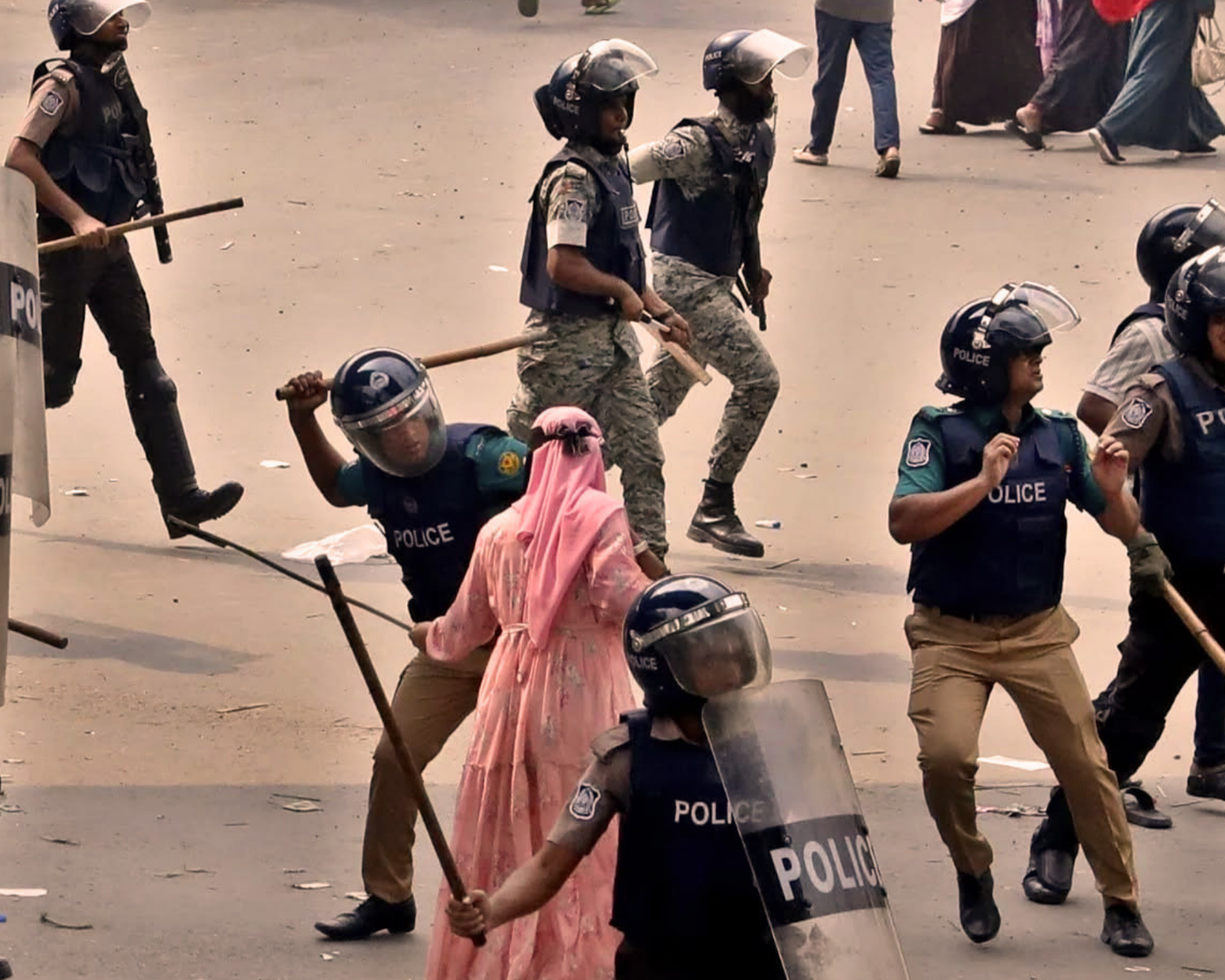
Image: Daily Star
Note: This article was originally published in Bengali at Dhaka Papers on November 1, 2026. The following is a translated and slightly edited version.
Twenty-seven year old Shumi Akter moved from Nilfamari to Dhaka to make a living. She spent her days in front of a sewing machine as a sewing operator for Deco Group in its Agami Apparels factory for a pittance. Her wages amounted to a mere 12,500 taka. Sumi spent her last breath on top of her sewing machine, as her application for sick leave was denied. Not that the sewing machine cared; the process of capital accumulation continued and so did the luxury lifestyle of the owners of the factory.
The current chairman of Deco Legacy Group, Mohammad Shahadat Hossain Kiron, claimed himself to be a nature-lover in an interview with The Business Standard in 2022. He travels by himself for work; his wife accompanies him when they travel for pleasure. His wife similarly loves nature and helps Shahadat capture moments and wonders. When he went on a whale watching trip, his wife was with him.
Shahadat described his passion for photography, his love for nature, and the time he spends with his wife and children. He has the luxury of caring for his children, spending time with his wife, enjoying nature, hosting photo exhibits–all of which are provided by his profitable garment factory. The same one in which Shumis spent her life. She was ill and wanted to see her youngest son one more time but wasn’t granted her leave. She saw her son one last time during her lunch break and returned to work. She took her last breath in that same factory. The same day, another worker died in a factory in Gazipur.
The workers who hold Bangladesh’s economy on their shoulders are currently engaged in a massive protest. The major media outlets are actively invisibilizing the protests through a coordinated blackout. And many of those who are not have dubbed the workers’ legitimate demands as conspiratorial, the protests as chaotic and anarchic, and the protestors as outside instigators. The workers’ demands are legitimate. They are demanding a monthly wage of thirty thousand taka. The current minimum wage is a mere twelve thousand and 500 taka after the long hours and hard labour workers put in. The workers’ household grows, their children get older, their living costs and medical bills go up but their wages don’t increase proportionally. If they did, Shumi and others wouldn’t expend their lives in front of their sewing machines.
But even such a paltry raise seems unreasonable and unbearable to certain sections of the educated middle class, the petit bourgeoisie. In the comments section of a video posted by The Daily Star, a young man commented that his entry level job after graduating from North South University paid him 12,500 taka. His basic premise was that if he, as a university graduate, starts his career earning 12,500 taka, then how dare these “illiterate low lives” dare to ask for thirty thousand taka in wages! It is entirely possible that a recent NSU graduate can begin their career earning 12,500 taka. But that graduate has no idea what 12,500 taka is worth to a factory worker. He has no idea that the rise in wages for garment workers does not conflict with his own raises or his own material interests. He probably has never thought about how much physical labor a garment worker has to put in to earn the same amount of money.
To truly understand the legitimacy of a raise, we must look at the value that a worker creates. The worker uses his labor to transform buttons, threads and fabric into clothing to be sold at much higher prices in the U.S. The huge gap between the price of raw materials and the retail price of clothing is mainly created through the labor of workers, but only a fraction of it returns to them as wages, and the rest as profit to factory owners, buyers and brand owners.
A graduate from the Shahjalal Science and Technology University wrote on a Facebook post “do [garment workers] know the salary of a fresh graduate?” in response to the garment workers’ demands for a thirty thousand taka wage. What this graduate doesn’t know is that his educational institution that he takes such pride in also runs on the value created by the same workers he scorns. These graduates also don’t know that workers don’t get raises just because they demand them. Workers face the threat of termination and of being blacklisted. They have no job security and no guaranteed wage increases. The truth is that the institutions our educated petit bourgeoisie are so boastful of cannot guarantee a future anymore. They are unable to confront the identity crisis they face with their social status, salaries and jobs, and the only escape for them is to prove they are better than blue collar workers.
A few days ago I went to speak with garment factory workers in Mirpur and Gazipur for data collection for a well-funded project on the struggles of working mothers. The workers said to me, “You ask us questions, you take our answers and do your research. You make the money. What do we get? Their accusation isn’t entirely false. How has all the research performed in NSU on the Ready-Made Garment sector helped create empathy for these workers among the middle and upper middle class students? Or is it fracturing any remaining solidarity? The plight of garment workers, their struggles, oppression and their working conditions come up repeatedly as research subjects but how much of those research outcomes actually affect their lives?
The state apparatus wants to instill in university graduates that the children of workers must remain workers, they must not be allowed to achieve class mobility. And the responsibility of maintaining such an order is happily taken on by our graduates: our civil servants and future leaders. When the cogs of the state and economy are faced with workers’ demands, then every mechanism of state and capital work to create interclass conflict. The middle class are made to understand that they must pay the price for the increase in workers’ wages. If the working class gets a raise, then the middle class will pay for it out of their own pockets, their livelihoods and even their dignities. That’s when the middle class of our city start to say, why are these low lives occupying our streets? Why do they want a thirty thousand taka salary? But the middle itself is struggling and is closer to the working class than the upper class. They struggle with oil and gas prices despite their expensive university educations. This is the crisis of the middle class–they cannot bear the economic pressures on their lives but also cannot suffer to ask for more for themselves. Thus, the sight of the workers protesting for their self interest makes them bristle.
Another section of the middle class maintains moral support for the working class. They sympathize with the workers’ demands for a higher wage. But they are concerned by the method of such protests–must they act with such violence, they wonder, to get their raises? It’s their right to protest, but isn’t it a bit much? Our economy is not in good shape, they say. Although this section of the middle class supports the workers’ protests, they do not do so unconditionally. They are sympathetic to the plight of the workers, but they are not in solidarity with the workers’ struggle for their economic and political rights. They are weighed down by the cost of living but they refuse to connect their struggles with those of the workers.
We often hear a common refrain from leftists: the Bangladeshi government is on the side of the factory owners. The Bangladeshi garment factory owners routinely claim in front of international buyers and multinationals that they take significant risks to conduct business in Bangladesh and that they have created 250,000 to 300,000 jobs. They have martyred themselves for Bangladesh’s economy. But a true accounting shows how much support this industry receives in the form of government subsidies and tax cuts. The owners, on the one hand, are exploiting the cheap labor of workers and, on the other, reducing business costs thanks to the state’s policies and financial assistance.
There is no end to the state support for the garments industry: tax benefits for raw materials and equipment, initiatives to increase export, facilities for electricity and gas usage, capital assistance and tax cuts. Compared to other industries, this particular sector also enjoys a lower corporate tax rate. Under the current taxation system, the garments sector pays 12% and a “green” factory enjoys a 10% tax rate. Not only is the state facilitating their business opportunities, it is also reducing the tax burden on their profit margins. How does the state hold garment factory owners accountable after providing such benefits? Has the state demanded that these owners pay their workers a livable wage? What role has the state played in ensuring workers’ job security, access to healthcare, guaranteed leave, working hours and deserving wages?
Factory owners claim they are creating job opportunities and development. In a workplace where a worker cannot get sick leave, where a female worker must depend on her lunch break to see her children, where she takes her last breath in front of a sewing machine–is that development? Will the country face an economic crisis if the workers’ wages go up? Or are the factory owners trying to maintain their profit margins? A salary raise doesn’t automatically mean additional burden on the economy. In fact, more money in workers’ hands creates demand within the economy. If a worker’s wages increase, they pay their children’s tuition, grocery bills, rent and healthcare costs. Their spending power will translate to income for others. The grocer will use that money to buy more commodities, the landlord will spend that money in the market and healthcare and transport workers will see a rise in their incomes. The extra money in a worker’s hand will circulate within the economy. On the other hand, an increase in an owner’s profit will result in more spending in luxury hotels both at home and abroad, and in the supermalls of the West. When a portion of profit is used to accumulate wealth abroad, it doesn’t create the same demand within the country’s economy. As a result, the buying power of a worker contracts while the domestic economy suffers.
The key conflict here is not between economic capacity versus workers’ wages, but rather the distribution of wealth and the transfer of wealth abroad. “Economic crisis” is used as an excuse when the workers demand a living wage. Even as Bangladesh’s banking sector is suffering from bad debt, default loans and irregularities, the capitalist class is influencing state policy and power. The centralization of power and capital, the export of wealth and the unequal distribution of state benefits are never questioned with the same intensity. The increase in owners’ profit margins is championed as economic growth, but the demands for higher wages are dubbed as pressures on the economy.
At the heart of it, this is a matter of class politics. The idea that a rise in wages will destroy the economy pits the middle class against the workers. But it is the duty of the state to ensure that workers get a living wage, and it is the responsibility of the owners, who profit from the workers’ labor, to pay them that living wage. This is not a question of the middle class bearing the costs of the workers’ wages, or a transfer of wealth between the two groups. This is a question of how much of the produced wealth is returning to workers and how much of it is accumulated in profits for owners.
Nuzia Hasin Rasha is a journalist and researcher based in Dhaka, Bangladesh